


Srinagar: After years of delay and failed bids, the Jammu and Kashmir government has finally zeroed in on two insurance companies for implementing crop insurance for cash crops, including apples, which are the backbone of the UT’s agro-economy.
The agriculture department has accepted bids from two insurance companies, Agriculture Insurance Company of India and Tata AIG General Insurance, for implementing the Restructured Weather-Based Crop Insurance Scheme (RWBCIS). This scheme will cover apple and saffron crops in the Kashmir Valley and mango, litchi and saffron (Kishtwar only) in the Jammu division.
The crop insurance became necessary following demands from fruit growers in the UT as climate change, like excessive heat, hailstorms, heavy rainfall or snowfall, caused losses to growers. Apple growers and traders suffered Rs 200 crore in losses last August due to floods and heavy rainfall and highway blockades.

According to the Economic Survey of 2024-2025 of the Jammu and Kashmir government, the area under major horticulture crops has increased from 3.42 lakh hectares in 2021-22 to 3.44 lakh hectares in 2024-25.
The Jammu and Kashmir horticulture sector has increased rapidly, with the fruit production estimated to be 30 lakh metric tonnes in 2030 from last year’s 26.92 LMT. The government estimates that 21 LMT apples are grown in the Valley annually.
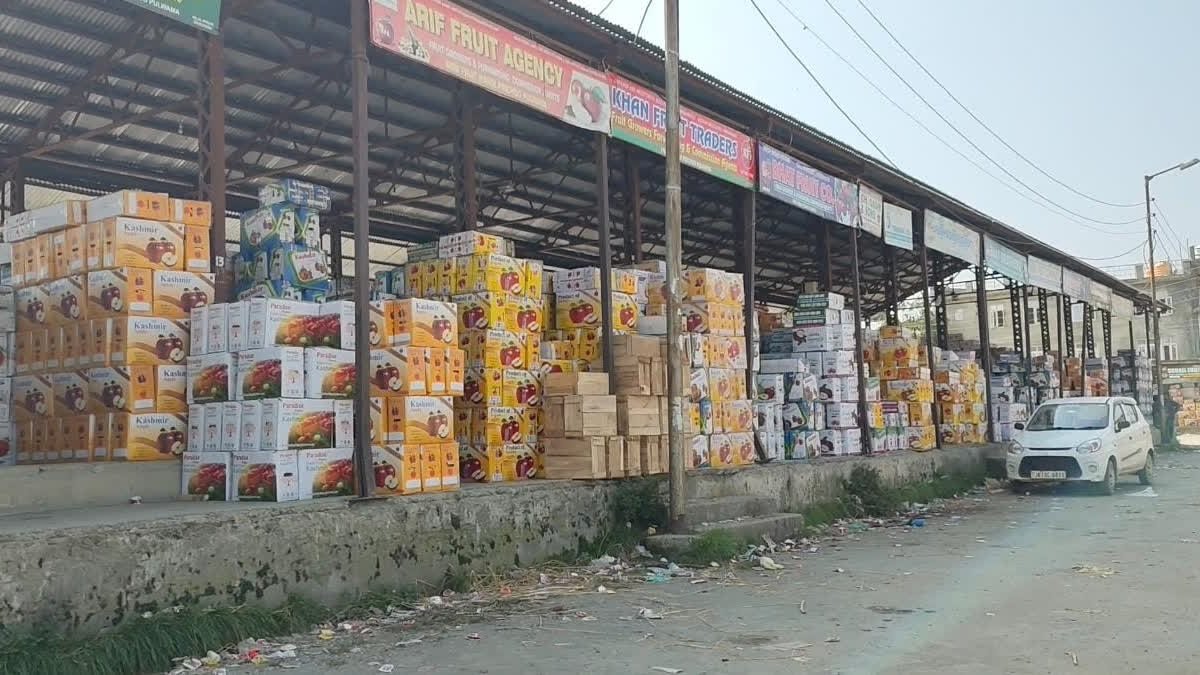
Economists and fruit traders say the apple industry contributes over 7% to Jammu and Kashmir’s GDP. With production ranging between 20 and 25 lakh metric tonnes, it generates Rs 10,000 crore in revenue and supports around 35 lakh families. Kashmir apples make up 78 per cent of India’s total apple production.
A senior official in the agriculture department told they are finalising the insurance scheme with these lowest bidders, and it will be started in the current year. He said insurance premiums and cover will vary in different districts depending upon the crop cultivation.
“The weather-based insurance will be covered as per scientific analysis and survey data of districts where the insured crops are grown. Once we complete these procedures, crop insurance will be started this year,” the official said. He said both the government and the insurance company will give insurance as a complete package for growers from start to post-harvest.
Jammu and Kashmir Chief Minister Omar Abdullah recently announced that the government will launch a weather-based crop insurance scheme for growers. “There were efforts earlier, but that was only a show-off to benefit certain individuals. But this scheme will make growers safer, and they will feel relief from the climate-related losses,” he said.
Javaid Ahmad Dar, minister for agriculture, rural development and Panchayati Raj, said that the chief minister has shown very keen interest in the insurance scheme, considering climate change losses to farmers. “We will ensure the crop insurance scheme is implemented sooner,” Dar said.
Kashmiri farmers are optimistic, saying the insurance cover can help them recover from losses due to adverse weather. “We are facing losses from the last several years due to weather changes. Having an insurance cover can help us cope with the losses,” Bashir Ahmad, an apple grower in Pulwama, said.
But apple growers’ representatives are urging the government to include them in the consultation process before implementing the scheme. Zahoor Ahmad Rather, president of the Apple Federation of Kashmir, said the government must prioritise insurance by considering a grower as a unit rather than his total land.
He said that the landholding of apple growers in Kashmir is scattered, which cannot be insured fairly. “For its proper implementation, a grower must be considered as a unit. Consultation must be held with growers before the bureaucrats finalise the policy.
Sartaj Shah, Director Agriculture Kashmir, said the companies are quoting high premium rates for conventional apple orchards and lower rates for high-density orchards. “Our area under conventional apple orchards is more than the high-density apple plants. We are strategising with the companies about how to implement the scheme,” Shah said.

