

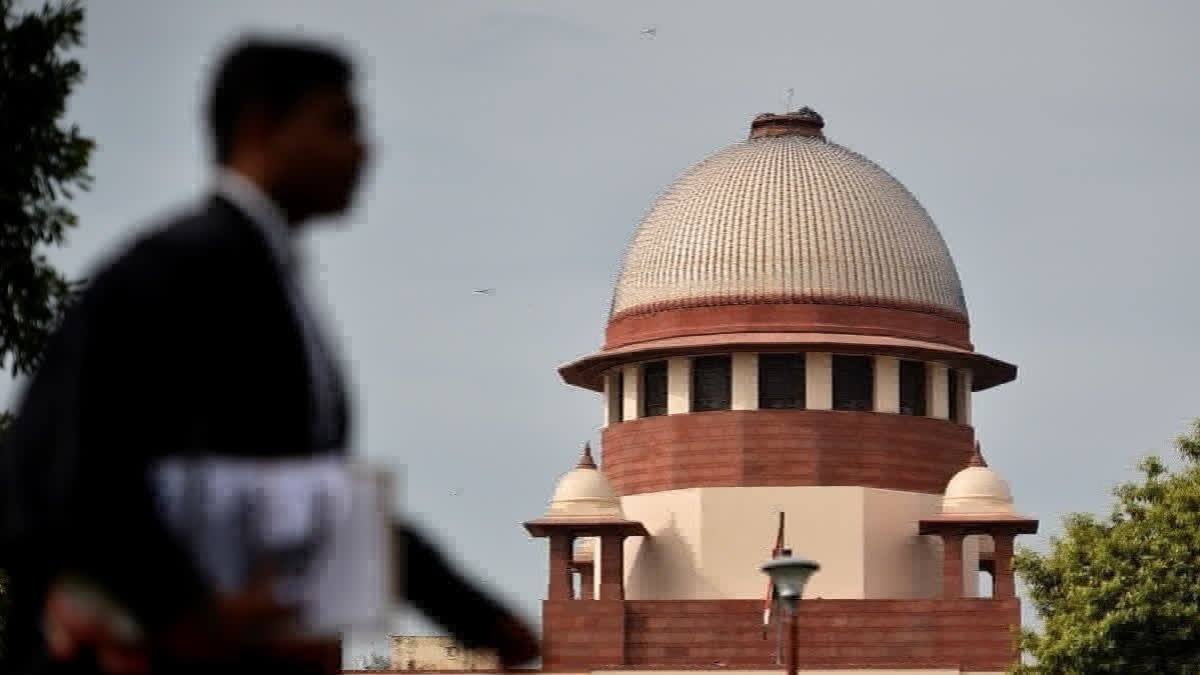

New Delhi: The Supreme Court on Friday said right to speedy trial is a precious constitutional right but it cannot be exercised to grant bail in matters governed by special enactment such as the NDPS Act, particularly where the recovery is of commercial quantity.
A bench of justices Sanjay Karol and Augustine George Masih made the observation while setting aside bail to two individuals by the Punjab and Haryana High Court in a case involving recovery of commercial quantity of heroin.
“The right to speedy trial, rooted in Article 21 of the Constitution, is undoubtedly a precious Constitutional right. That said, in matters governed by a special enactment such as the NDPS Act, particularly where the recovery is of commercial quantity, the said right under Article 21 must be exercised within the framework of Section 37 and cannot be pressed into service solely on the ground of delay to override it.
“The constitutional right under Article 21 and the special provision of law under Section 37, NDPS Act are to be read harmoniously and not placed in opposition to each other. The High Court, by failing to record its satisfaction on the twin conditions under Section 37, has in this court’s view, committed an error,” the bench said.
The top court said the impugned high court order reflects a lack of adequate consideration of the record as the accused himself admitted that ‘apart from the present case one more case FIR is there against him’.
“The High Court, however, has recorded that the respondent is ‘not involved in any other case’, and has expressly counted that recording among the considerations weighing in favour of the grant of bail.
“The recording of the High Court and the admission by the respondent are irreconcilable. A Court while considering the prayer for bail under a special statute and attracting Section 37 of the NDPS Act could not have granted relief on grounds directly at odds with the admissions made by the respondent in the very petition before it. The said order being contrary to facts is flawed that speaks for itself as it appears that this fact was not brought to the notice of the High Court,” the bench said.
The apex court said the impugned high court order is conspicuously silent on the fact that the petition before the high court was the second petition under Section 483 of the BNSS, the first being dismissed as withdrawn.
“A Court entertaining a successive bail petition under a special statute is bound to refer to the fate of the earlier petition and to record what change in circumstances justifies a fresh consideration,” it said while setting aside the high court order and directing the accused to surrender within a week.

