

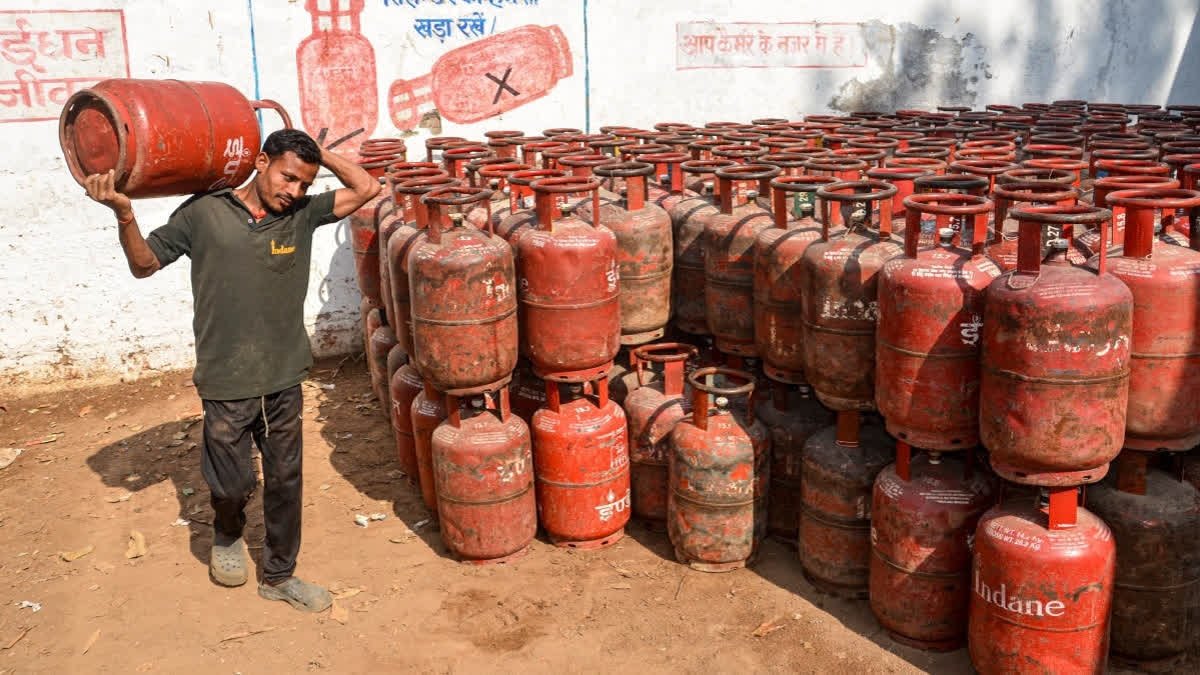

New Delhi: The government on Friday said domestic fuel supplies, including Liquefied Petroleum Gas (LPG), remain stable despite the evolving geopolitical situation in West Asia, even as it continues to closely monitor developments in the region and ensure the safety of Indian nationals abroad.
Addressing concerns around availability, Sujata Sharma, Joint Secretary (Marketing & Oil Refinery) at the Ministry of Petroleum and Natural Gas, said supply-side measures and demand management strategies have helped maintain stability across key fuels.
“On-demand management, as you know, efforts have been made at several levels. Booking has been rationalised to some extent. As a result, domestic supplies of petrol and diesel are running smoothly, with no cuts. Domestic LPG cylinders are also being supplied without disruption. There are still some issues in the commercial segment, but the Government has gradually increased supply there to about 70 per cent,” she said.
The assurance comes amid heightened public concern over potential disruptions due to tensions in oil-producing regions. Officials emphasised that there is no need for panic buying, with supply chains being actively managed.
Sharma further noted that alternative fuels are being ramped up to support industrial demand. “Additional fuels such as coal and kerosene are being boosted to ensure industries face no shortages. Natural gas supply is at 100 per cent for domestic PNG consumers and transport (CNG), and around eighty per cent for industrial users on the grid. At every level, the Government has taken steps to minimise inconvenience to the public,” she added.
While domestic supplies remain largely unaffected, the government acknowledged some constraints in the commercial LPG segment but indicated that the situation is improving with gradual supply increases.
On the international front, the Ministry of External Affairs (MEA) said it is maintaining a close watch on the situation in the Gulf and West Asia, with a focus on safeguarding Indian citizens in the region. Officials said coordination efforts are underway with state governments and Union Territories, while Indian missions abroad have activated special control rooms and 24×7 helplines to assist nationals.
Embassies are issuing regular advisories and are in constant touch with Indian community groups and companies to address concerns. The government is also facilitating consular support and return requests, particularly for Indian seafarers affected by the disruptions.
Authorities indicated that flight operations are gradually stabilising. Since February 28, over 12.38 lakh passengers have travelled to India from the region, reflecting a steady movement of people amid the situation.
On Friday alone, around 110 flights were expected to arrive from the United Arab Emirates, along with additional services from Saudi Arabia, Oman and Qatar. Officials noted that airspace in Bahrain, Iraq and Israel is open with limited operations, while Iran remains partially open for cargo and charter flights.
In a key development, the Indian Embassy in Tehran has advised against travel to Iran and has so far facilitated the evacuation of 2,432 Indian nationals. Limited flight services from Kuwait are also expected to resume shortly, providing further relief.

