

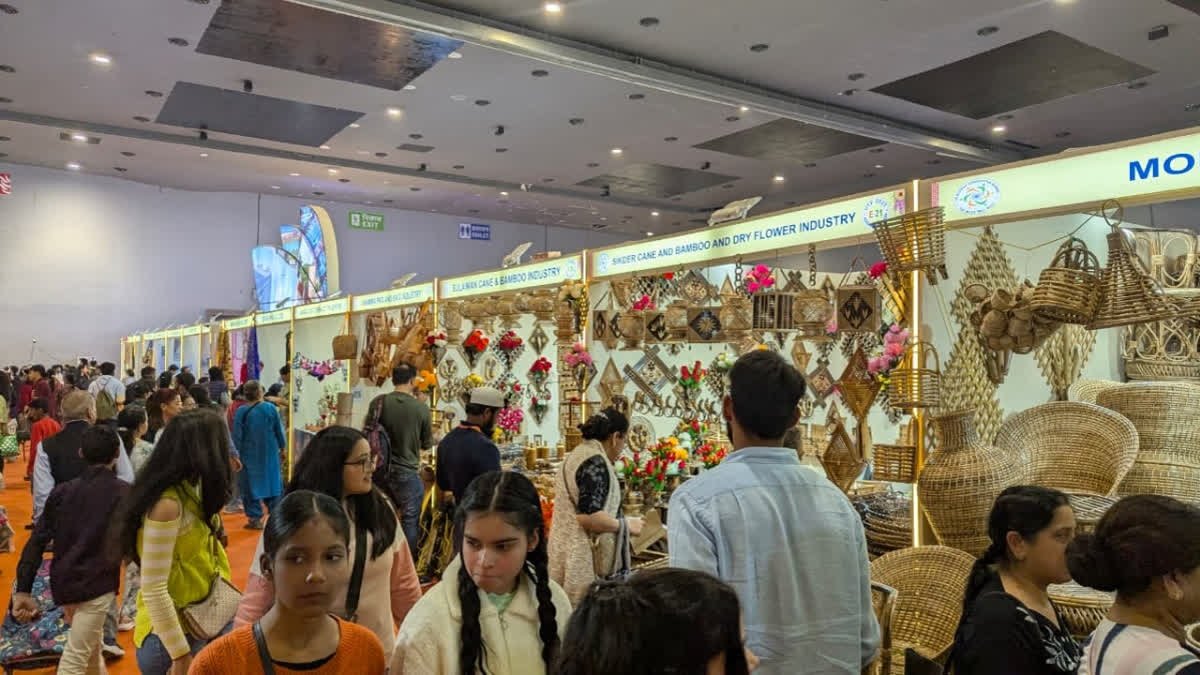

New Delhi: Assam’s signature products, such as tea, intricately crafted bamboo and cane items, agarwood products, and a variety of handloom and handicraft items, have become the center of attraction at the 44th India International Trade Fair (IITF) 2025 in New Delhi.
Sabir Nisat, Deputy Director of the Assam Information Centre in New Delhi, told ETV Bharat on Friday, “The Assam Pavilion at the 44th India International Trade Fair (IITF) 2025 at the Bharat Mandapam has emerged as a major attraction, attracting visitors with a vibrant blend of economic potential and cultural heritage under the national theme ‘Ek Bharat, Shreshtha Bharat.'”
In addition to commerce, the pavilion also offered a compelling cultural experience. Exhibits showcased Assam’s UNESCO World Heritage Sites, including Charaideo Maidam and Kaziranga National Park. Live performances of traditional dances, especially the vibrant Bihu and the beautiful Bagrumba, further enhanced the pavilion’s appeal. Nisat said, “The performance of Pujya Guru Asana further showcases the spiritual and cultural heritage of Assam’s Vaishnavite traditions, rooted in the teachings of Srimanta Sankardev.” Traditional folk songs and dances from the state were presented on Thursday evening to mark Assam Day.
Assam’s Industries and Commerce Minister Bimal Bora praised Assam’s rich cultural heritage and its historical contributions, and thanked Prime Minister Narendra Modi for his support to the region.
Bora said, “Assam has emerged as one of India’s fastest-growing states, reflected in its impressive GSDP growth trajectory, increasing from USD 29 billion in 2013-2014 to USD 68.7 billion in 2023-2024. By next year, GSDP is projected to reach USD 85.8 billion and USD 143 billion by 2030.”
Meanwhile, the Ministry of AYUSH’s pavilion has become one of the most visited attractions at the ongoing India International Trade Fair, drawing thousands of visitors eager to learn about holistic wellness solutions spanning Ayurveda, Yoga, Naturopathy, Unani, Siddha, Sowa-Rigpa, and Homeopathy.
An AYUSH Ministry spokesperson said, “From digital diagnostics and diet demonstrations to interactive games and expert consultations, the AYUSH stalls showcase a unique aspect of the AYUSH health system.” Departments and organizations affiliated with the Ministry of AYUSH are also showcasing their products at the trade fair.
The highlight of the pavilion is the All India Institute of Ayurveda (AIIA), which is highlighting Ayurveda-based dietary practices through a detailed presentation of functional food products and their therapeutic benefits. The institute is showcasing items such as Ragi Nachos, Sunthyadi Laddu, Ragi-Urad Laddu, Mudga Soup Premix, and Yavadi Saktu, all prepared according to classical Ayurvedic principles.
The National Institute of Ayurveda (NIA) in Jaipur has presented a large display themed “AYUSH Food.” The institute has a range of sattvic dietary products, including Triphala Jam, Rejuvenating Granules, and Ragi Biscuits. Personal care items made with Ayurvedic ingredients, such as Aloe Vera Gel, Lip Balm, and Foot Cream, are also on display.
The Rashtriya Ayurveda Vidyapeeth (RAV) in New Delhi is showcasing a variety of nutritional products based on Ayurveda under the theme of AYUSH diet. Its stall features items like nutritious cookies (sesame, celery, and cumin), Ani bread, Jitayu tea, Ampi drink, and Full Moon chocolate, emphasizing the importance of incorporating Ayurvedic principles into daily diets. To engage visitors, RAV is also conducting a millet quiz to raise awareness about the benefits of millets in Ayurveda.
Unani medicine is being showcased jointly by the Central Council for Research in Unani Medicine (CCRUM) and the National Institute of Unani Medicine. A major attraction at the stall is a digital temperament-assessment kiosk, which helps visitors understand their own temperament type—such as Damavi, Balghami, Safravi, or Saudavi—based on Unani diagnostic principles.
The Siddha system of AYUSH is being showcased jointly by the National Institute of Siddha (NIS), Chennai and the Central Council for Research in Siddha (CCRS), with a focus on preventive health, nutrition and public awareness.

