

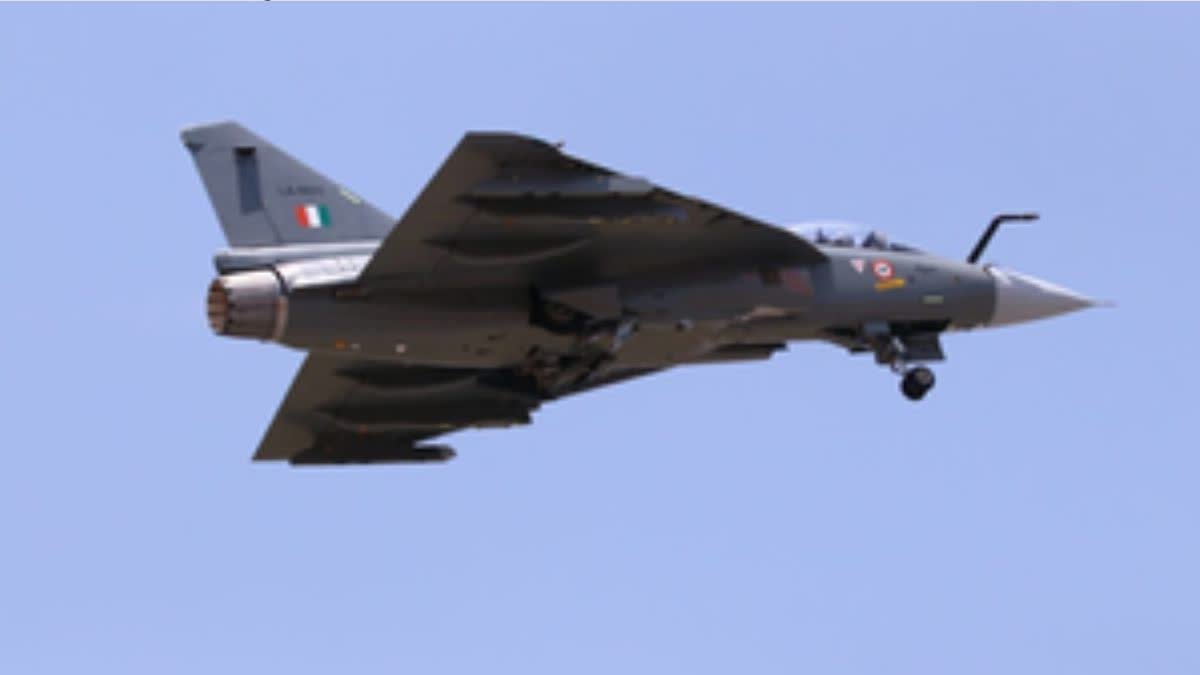

Dubai/New Delhi: A Tejas aircraft participating in a demonstration at the Dubai Air Show crashed on Friday afternoon, according to the news agency AP. The HAL-built aircraft crashed at around 2:10 pm local time while performing an aerial display in front of a large crowd. The pilot died in the accident.
Thick black smoke was seen rising from the crash site near the airport, causing panic among onlookers, including families with children, who had gathered to watch the show. It is not yet clear whether the pilot managed to eject before impact. Officials have yet to provide further details after emergency teams arrived at the scene. The Indian Air Force stated, “An IAF Tejas aircraft crashed during an aerial display at the Dubai Air Show today. The pilot sustained fatal injuries in the accident. The Indian Air Force deeply regrets the loss of life and stands with the bereaved family in this hour of grief. A court of inquiry is being set up to determine the cause of the accident.” ANI, quoting Khaleej Times, reported that the fighter jet crashed shortly after takeoff. Photos and videos shared online show a plume of black smoke rising from the grounded aircraft. The news outlet quoted an eyewitness as saying, “The plane crashed as soon as it took off. I’m not sure which aircraft it was.”
Another eyewitness said helicopters and firefighters arrived at the scene. They added, “Everything is clear now. The entire incident was handled within about 45 minutes. We’re not sure if the program will resume.” Gulf News reported that the show was briefly halted and visitors were directed back to the exhibition area. This is breaking news, and details will be provided soon.
What is Tejas?
The Tejas is a 4.5-generation fighter aircraft designed to handle offensive air support, close combat, and ground attack missions. Designed for multiple uses, it is also engineered for ground and maritime operations, making it one of India’s most adaptable indigenous platforms.
The Tejas family includes single-seat fighter variants for both the Air Force and Navy, as well as twin-seat trainer versions for each service. According to information on the HAL website, this is the most advanced version, the LCA Mk1A, which incorporates major upgrades to enhance combat capability and survivability.
It features an AESA radar, an advanced electronic warfare suite with radar warning and self-protection jamming, a digital map generator, smart multifunction display, a combined interrogator and transponder system, and a modern radio altimeter, along with several other advanced systems that enhance its operational performance.

