

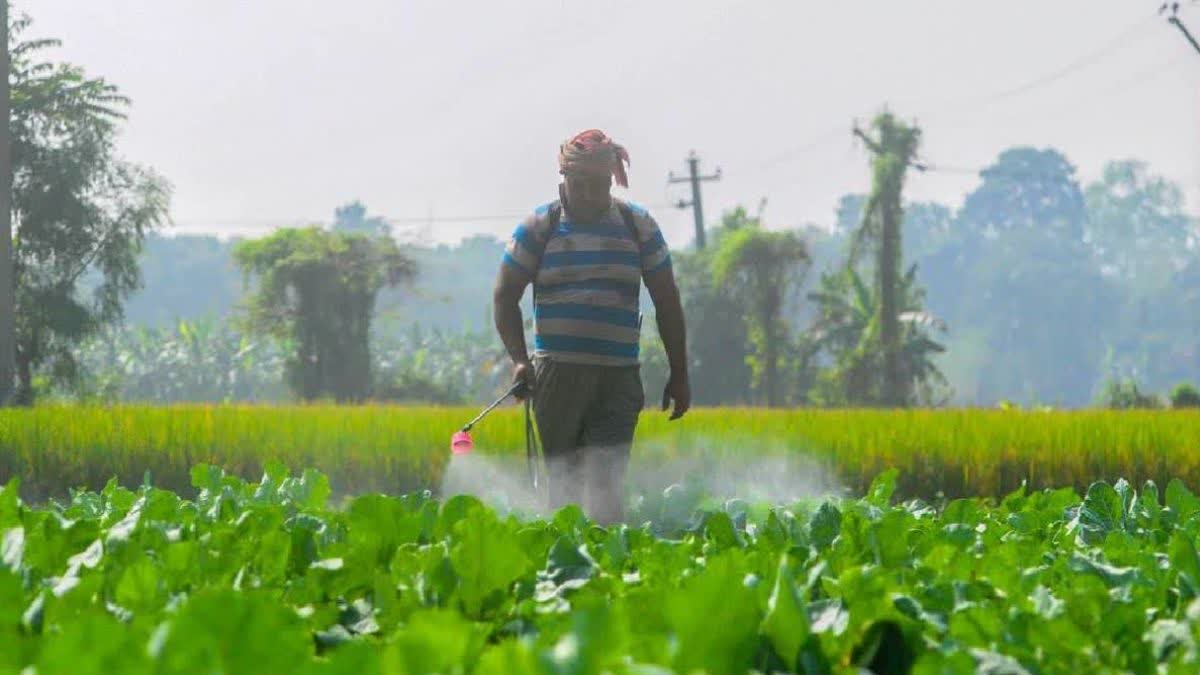

New Delhi: The Government of India has acknowledged before the National Green Tribunal (NGT) that skewed fertiliser application by farmers in various regions across the country has negatively affects overall soil health. The Union Ministry of Agriculture and Farmers Welfare has also disclosed that it is actively endorsing a range of scientifically-supported practices aimed at improving and sustaining soil organic carbon levels across different states and Union Territories (UTs).
The Ministry said this while responding to the NGT’s query on a media report, quoting an Indian Council of Agriculture Research (ICAR) study that claimed “climate change imbalance in fertiliser use impacts soil’s organic carbon”.
What Is The Issue?
The NGT on November 29, 2025, took suo motu notice of the media report, issuing an order on December 2, 2025 that the study by ICAR-Indian Institute of Soil Sciences, Bhopal, based on 2,54,236 soil samples from 620 districts covering 29 states — had found that if organic carbon is low, micro-nutrient deficiency is high, and vice versa.
The NGT said organic carbon in the soil declined whenever there was imbalanced application of fertiliser, noting that Haryana, Punjab, and parts of Western Uttar Pradesh have intensified use of fertiliser, skewed towards urea and phosphorus. It also observed that the the study also indicates the impact of climate change on organic carbon, with high temperature leading to declining organic carbon in the soil.
Organic carbon plays a crucial role in enhancing soil structure, augmenting nutrient availability, and improving water retention, thereby increasing crop productivity and promoting climate resilience. The NGT noted that the report raises substantial issues regarding environmental norms, and sought response from concerned ministries, including of Agriculture and Farmers Welfare, and ICAR.
What Ministries Have To Say?
In its report to the NGT, the Agriculture Ministry said the concerns raised have been under active consideration and proactive management of GoI for a considerable period. It said the ICAR study is a testament to the government’s commitment to scientifically assessing and addressing challenges related to soil health and climate change.
Saying that it is implementing numerous schemes and policies to promote balanced fertiliser use, enhancing soil organic carbon and ensuring the long-term sustainability of Indian agriculture, the Ministry said these initiatives are not reactive but are part of a long-term, well-considered strategy to safeguard the nation’s soil resources.
The Ministry pointed that issues of soil degradation and the impact of imbalanced fertiliser use are complex, and multifaceted challenges that require a coordinated, multi-pronged approach involving the Central government, state governments, research institutions, and the farming community. It also claimed that it is actively promoting a wide array of scientifically-backed practices to enhance and maintain soil organic carbon levels across the country, and integrating them into Central and state government programmes for effective implementation.
These recommended practices include residue recycling and prevention of crop residue burning; promotion of cover crops to protect soil from erosion and adding of organic matter; adoption of conservation agriculture practices involving minimum tillage, crop rotation, and permanent soil cover, besides the promotion of organic farming, use of organic manures, and encouraging of inter- and relay-cropping systems.
The Ministry further stated that the Government of India is implementing a dedicated National Mission for Sustainable Agriculture (NMSA), which is one of the eight missions under the National Action Plan on Climate Change (NAPCC).
Citing that it is actively promoting the production and use of alternative and nano-fertilisers, because “Nano Urea and Nano DAP improves nutrient use efficiency, reduces overall consumption of chemical fertilisers, and minimises adverse environmental impact through overuse. This is a forward-looking policy intervention aimed at fundamentally altering fertilizer application patterns in the country”, the Ministry said.
Emphasising that there was a need for adopting balanced fertiliser use strategies for better soil organic carbon and improved soil health, ICAR said it has “been continuously providing recommendations to various stakeholders, including the farming community of various states, for the adoption of soil test-based balanced fertiliser application and integrated nutrient management approaches”.
Expert’s View
Environmentalist B S Vohra told ETV Bharat, “Nitrogen-heavy, imbalanced fertiliser use degrading soil organic carbon, reducing fertility, and increasing pollution is a long-recognised issue. The government’s shift toward residue recycling, cover crops, and sustainable nutrient management is essential, but success depends on farmer adoption, incentives, and strong extension systems.”
Asserting that imbalanced fertiliser use threatens the environment by degrading soil health, reducing soil organic carbon, and lowering long-term fertility, he said, “It also causes water contamination through nitrate leaching, contributes to air pollution via residue burning, and disrupts ecosystems. These impacts collectively intensify climate stress and pose risks to human and ecological health.”
Vohra further said that the government should enhance the monitoring of soil health, broaden use of soil health cards, and promote the application of balanced fertilisers, adding that strict enforcement against stubble burning, coupled with farmer education and better extension services, are essential for sustainable, climate-resilient agriculture.

