

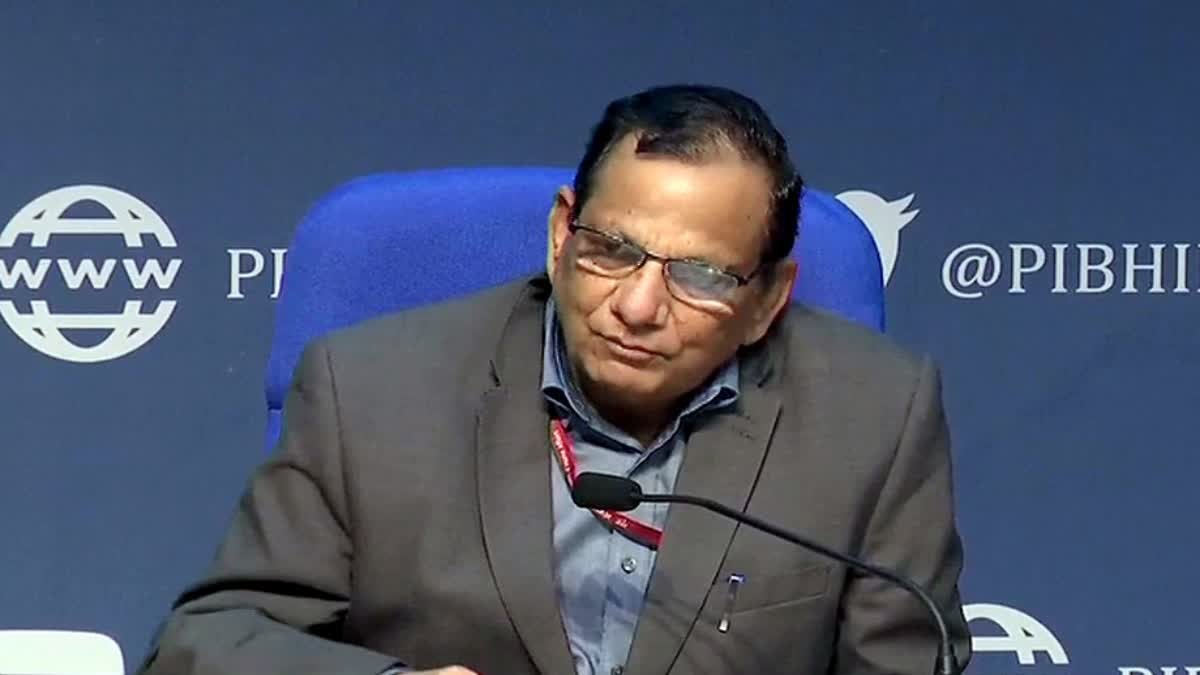

New Delhi: Dr. VK Paul, Health Member at NITI Aayog, said on Thursday that the world is facing zoonotic diseases, climate-sensitive diseases, and other emerging threats that respect borders. He said that India has launched a joint outbreak investigation to address all zoonotic and climate-related threats.
He also said that medical countermeasures are under development, which will strengthen India’s pandemic preparedness architecture. Paul was addressing the National One Health Mission Assembly 2025 at Bharat Mandapam here. He said that with its vast biodiversity and large population, India is at a unique juncture of both responsibility and opportunity.
What is the National One Health Mission?
Paul, who is also an advisor to the Health Ministry, He said, “The National One Health Mission (NOHM) is one of the largest and most integrated initiatives in this domain to date. It is a long-term commitment aimed at building surveillance networks and mechanisms that connect ministries, institutions, and academia through technology-enabled systems.”
He explained that necessary work has already begun, including surveillance in hotspots where humans and animals come into close contact, which is essential for detecting and mitigating emerging threats.
Calling for a coordinated and rapid response, Paul said that disease outbreak investigations, threat communication, and coordinated action must occur simultaneously at all levels. Ensuring the availability of medical interventions – vaccines, diagnostics, and treatments – on a large scale is equally important for preparedness.
‘Need to create a new generation of health specialists’
Paul stated that India’s national network of BSL-3 and BSL-4 labs is now well-positioned to help quickly detect and respond to One Health threats and future pandemics. He emphasized the need to create a new generation of One Health specialists through joint training programs and the integration of One Health thinking into educational and research institutions.
He emphasized the need to create a new generation of One Health specialists through joint training programs and the integration of One Health thinking into educational and research institutions, while the national framework sets the overall direction. Paul emphasized that states will serve as the primary implementing agencies and their active engagement is crucial for the mission’s success.
Health Minister JP Nadda’s Address
Addressing the gathering, Union Health Minister JP Nadda highlighted India’s progress in health research and innovation over the past decade. Nadda said, “India has emerged as a major global player in pharmaceuticals and medical science.”
The minister recalled the country’s successes in vaccine development, including indigenous COVID-19 vaccines like Covaxin, Covishield, Corbevax, and the world’s first intranasal COVID-19 vaccine. He said, “India has developed and supplied vaccines to over 100 countries, cementing our role as a trusted global partner.”
Nadda emphasized that India has also made significant progress in next-generation vaccine platforms – including mRNA, DNA, viral vectors, and biosimilars – strengthening the country’s ability to respond rapidly to emerging health threats.
Speaking about India’s progress in diagnostics, Nadda said, “In the diagnostics sector, India has become an innovation hub, powered by our talented researchers, growing start-up ecosystem, and strong technological capabilities. Solutions like TrueNat, PathoDetect, and CRISPR-based tests have made diagnostics faster, more accurate, and easier.”
INSACOG’s Role
He also emphasized INSACOG’s role in genomic surveillance and explained how platforms like COWIN demonstrate India’s ability to build a high-quality, population-scale digital health system. Referring to the National One Health Mission, Nadda described it as one of India’s most important steps towards pandemic preparedness.
This mission connects 16 different central and state ministries and departments related to human health, animal health, environment, agriculture, pharmaceuticals, defense, earth sciences, space sciences, and disaster management.
Nadda said, “The National One Health Mission is a unique example of collaboration across the government and society. For the first time, we have brought together all relevant ministries and departments to work together for the health of humans, animals, plants and the environment.”

