

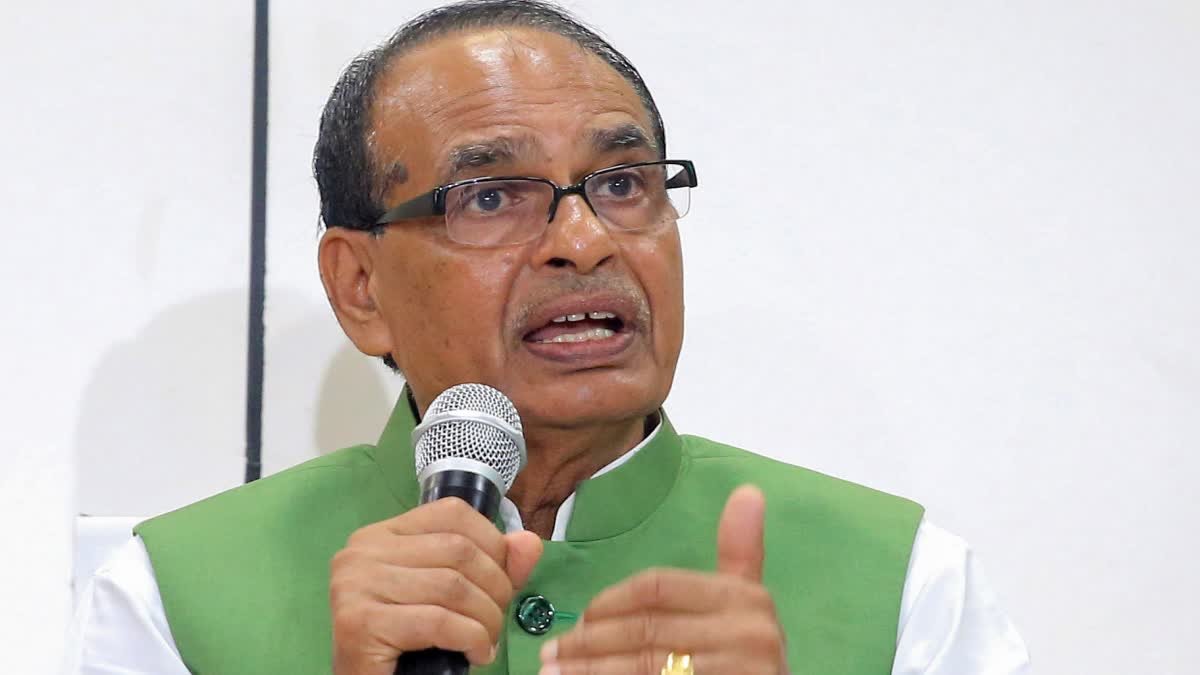

New Delhi: With the aim of making India self-reliant in oilseeds and pulses, the Union Agriculture Ministry will prepare a plan to increase yields with a special emphasis on productivity per hectare. The Ministry is emphasizing the need for crop diversification for a sustainable agricultural system and will focus specifically on pulses and oilseeds.
Explaining the importance of crop diversification, Union Agriculture Minister Shivraj Singh Chouhan said that cultivation of pulses and oilseeds not only improves soil health but also plays a vital role in strengthening nutritional security and increasing farmers’ income.
He said, “India’s rice and wheat production is already at global levels, so there is a need to focus on pulses and oilseeds. A strategy will be developed to increase yields with a special emphasis on productivity per hectare.”
Emphasis on Increasing Pulse and Oilseed Production
Referring to the low production of pulses and oilseeds compared to rice and wheat, Chauhan further said, “I have urged ICAR scientists to leave no stone unturned to increase the production of pulses and oilseeds, and to develop new varieties capable of giving higher yields.”
Speaking on crop diversification with special emphasis on pulses and oilseeds, Pankaj Agarwal, Principal Secretary to the Haryana Government, emphasized the urgent need to shift to more sustainable cropping systems, highlighting the importance of promoting pulses and oilseeds for soil health, nutritional security, and increasing farmers’ income. Agarwal emphasized, “Policy support, awareness, and market linkages are key factors for successful crop diversification in states.”
Shehla Nigar, Secretary (Agriculture), Government of Chhattisgarh, said, “Strategic coordination between various schemes is essential to ensure optimal utilization of resources and to deliver benefits to farmers at the grassroots level.”
Expressing similar views, Joint Secretary (Agriculture and Farmers Welfare) Anbalagan P. said that crop diversification is a strategy for farmers to increase the production of pulses and oilseeds. He said, “Diversification not only contributes to increasing farmers’ income, but also plays an important role in maintaining soil fertility and reducing agricultural risks.”
National Edible Oil Mission
According to Lok Sabha data, the government is implementing the National Edible Oil Mission – Oilseeds (NMEO-OS) to promote domestic oilseed production and strive towards self-sufficiency in edible oil production by increasing the production of primary oilseed crops.
Research Project
The Indian Council of Agricultural Research (ICAR) is also implementing two major research projects on hybrid development and gene editing to develop high-yielding, climate-resilient varieties of oilseeds. As a result, during the last 11 years (2014-2025), 432 high-yielding varieties/hybrids of nine annual oilseeds were notified for commercial cultivation in the country, including 104 for rapeseed-mustard, 95 for soybean, 69 for groundnut, 53 for linseed, 34 for sesame, 25 for safflower, 24 for sunflower, 15 for castor, and 13 for niger, the Ministry of Agriculture and Farmers Welfare recently informed the Lok Sabha.
Breeder Seeds
Lok Sabha data shows that during the last five years (2019-20 to 2023-24), approximately 1,53,704 quintals of breeder seed of in-demand varieties of various oilseeds were produced and supplied to public/private seed agencies for conversion into certified quality seed for farmers. More than 600 value chain clusters have been identified across the country under NEMO-OS, covering an area of more than 10 lakh hectares annually.

