

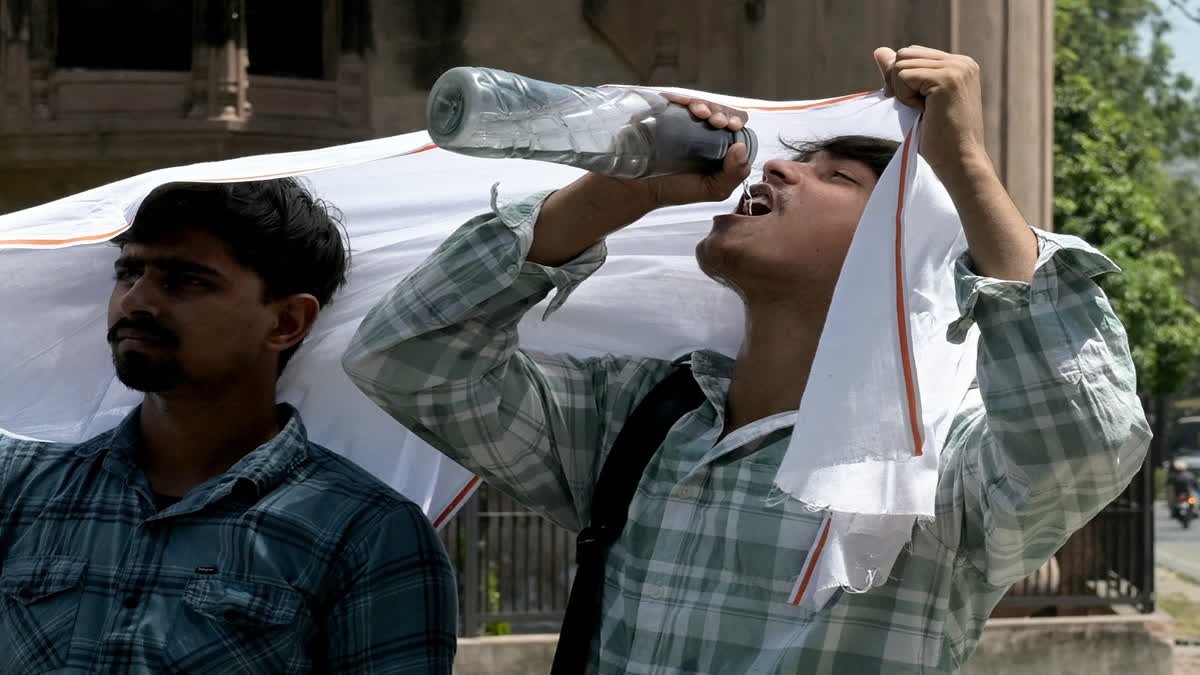

New Delhi: A new scientific study warns that India’s heat crisis is no longer just about rising temperatures, but about a meteoric rise in humidity.
Researchers highlight the growing threat of ‘wet-bulb temperature,’ a deadly combination of heat and moisture. As per a study called, ‘Anatomy of moist heatwaves in India during the summer monsoon season’, published in Climate Dynamics, “Every summer, India braces for dry heat. Thermometers climb, advisories go out, and people learn to fear the sun. But the deadliest heat risk India faces does not arrive in the summer; it is cloaked in monsoon clouds and disguised as relief”.
The study says, humidity can kill faster than any dry heatwave, because the body has no defense against it. “Sweat cannot evaporate, the skin cannot cool, and within hours, the consequences can be fatal,” it says.
Scientists at the University of Reading, working with researchers from India and the United Kingdom (UK), have for the first time decoded the mechanics of India’s monsoon-season ‘moist heatwaves’. What they found is both alarming and, for the first time, actionable.
Using over 80 years of weather data, they have shown that a single large-scale weather pattern, the Boreal Summer Intraseasonal Oscillation, which drives the monsoon’s own internal rhythm, can raise the occurrence of a moist heatwave in northern India by 125% above normal. And critically, this pattern can be forecast two to four weeks in advance.
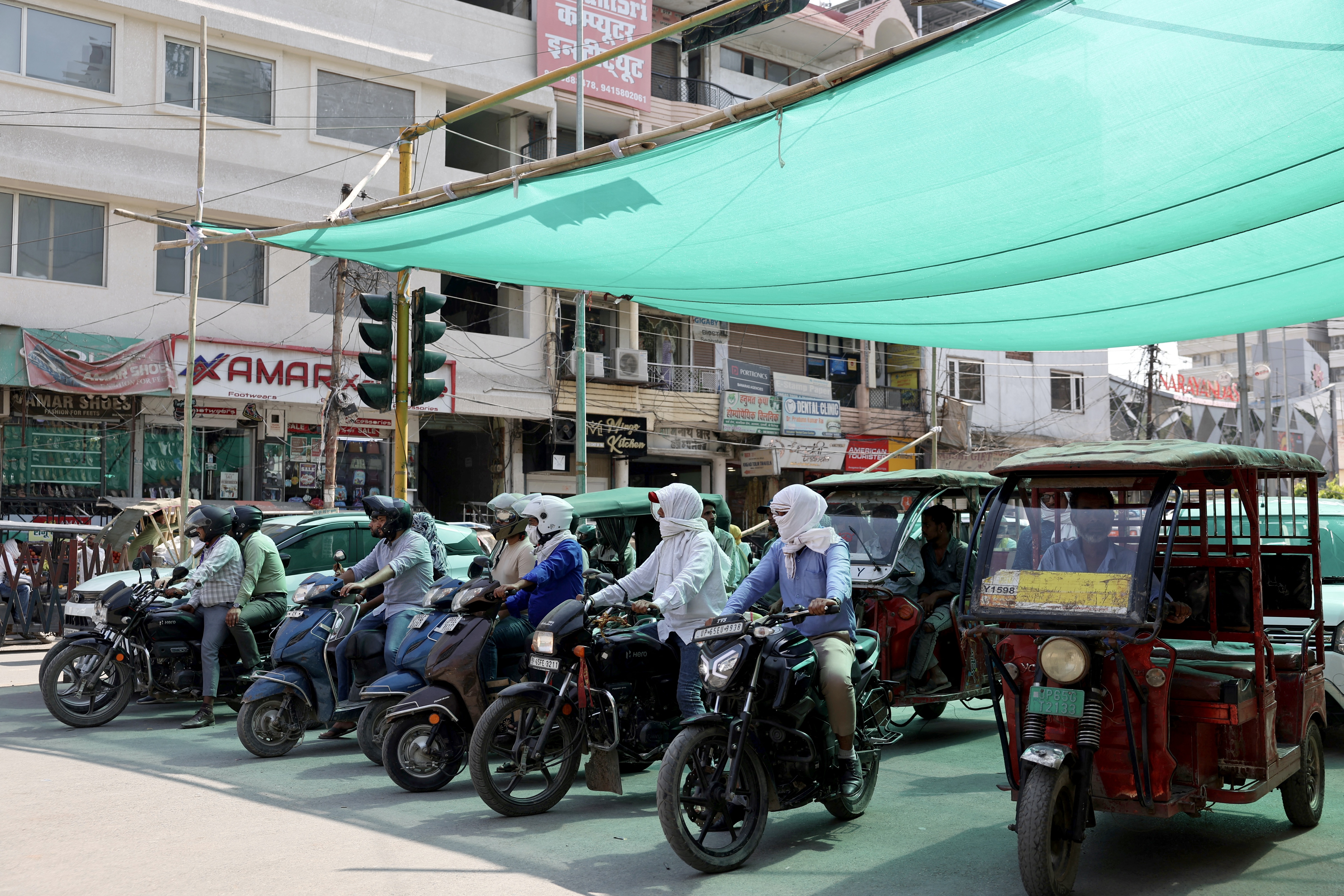
People with their faces covered stop at a traffic signal beneath a shade installed for protection from the heat on a hot summer day in Varanasi
Dr Akshay Deoras, who led the study, says the gap between how seriously India takes dry heat versus moist heat is itself a danger. “We often find people being more aware of dry heatwaves in India, given the scorching summer season, but moist heat remains less known and is therefore more dangerous,” he said.
Dr Deoras says, outdoor public gatherings are notorious for causing heat exhaustion. “Advance warning of a moist heatwave could allow organisers of public events, such as cricket matches and other large gatherings, to reschedule activities, extend drinks breaks, and strengthen on-site medical provision to protect both participants and spectators,” he says.
The study used wet-bulb temperature as its primary measure (a metric that captures both heat and humidity simultaneously) and directly reflects the body’s ability to cool itself. It is a far more accurate measure of human physiological risk than air temperature alone.
The research team’s most striking discovery is the monsoon’s role not just in causing moist heat, but in determining precisely where in India it will be most dangerous, and when. During active monsoon phases, when heavy rainfall sweeps across central and northern India, including the vast, densely populated Indo-Gangetic Plains, the region faces a dramatically elevated risk of moist heatwaves.
The mechanism is counterintuitive: the monsoon floods a climatologically dry region with sudden, intense moisture, pushing humidity to physiologically dangerous levels even as rain falls nearby. During a specific phase of the monsoon’s large-scale oscillatory pattern, heatwave occurrence over northern India rises by 125 per cent above normal levels.
During monsoon breaks, when rainfall subsides, the danger migrates south and east into peninsular India and the eastern coast. Here, where the atmosphere is already laden with moisture year-round, the absence of cloud cover and rain allows surface heat to build. The result is a different flavour of the same deadly condition. This geographic seesaw (north during active spells, south and east during breaks) repeats with enough consistency across 84 years of data to be genuinely predictable.
The large-scale oscillation driving these patterns — the Boreal Summer Intraseasonal Oscillation — can itself be forecast two to four weeks ahead. That lead time transforms moist heatwaves from sudden crises into events that can be prepared for.
“Our research shows for the first time that the monsoon is the key driver of where and when this deadly risk develops,” says Dr Deoras. He says, “Because we can forecast these monsoon patterns weeks ahead, this creates real opportunities to prepare and protect people. The cascading benefits of that preparation are significant. “Advance warnings could allow hospitals to increase staffing before moist heat-related admissions rise, enable city authorities to open cooling centres and adjust school hours, and help power grid operators manage infrastructure strain.”
The populations most exposed are those who cannot choose to stay indoors: agricultural workers in the fields of Uttar Pradesh and Bihar, construction labourers in Delhi and Mumbai, the elderly in homes without air conditioning, and the urban poor in cities where concrete retains heat long after sunset. Together, they number in the hundreds of millions.
The study identified two dominant statistical patterns that together explain the key modes of moist heatwave variability across India: one governing whether moist heatwaves occur at all, and a second governing whether they concentrate in the northwest or spread across the rest of the country. Taken together, these two patterns and their relationship to the monsoon’s own internal oscillation form the predictive framework at the heart of the new early warning approach.

