

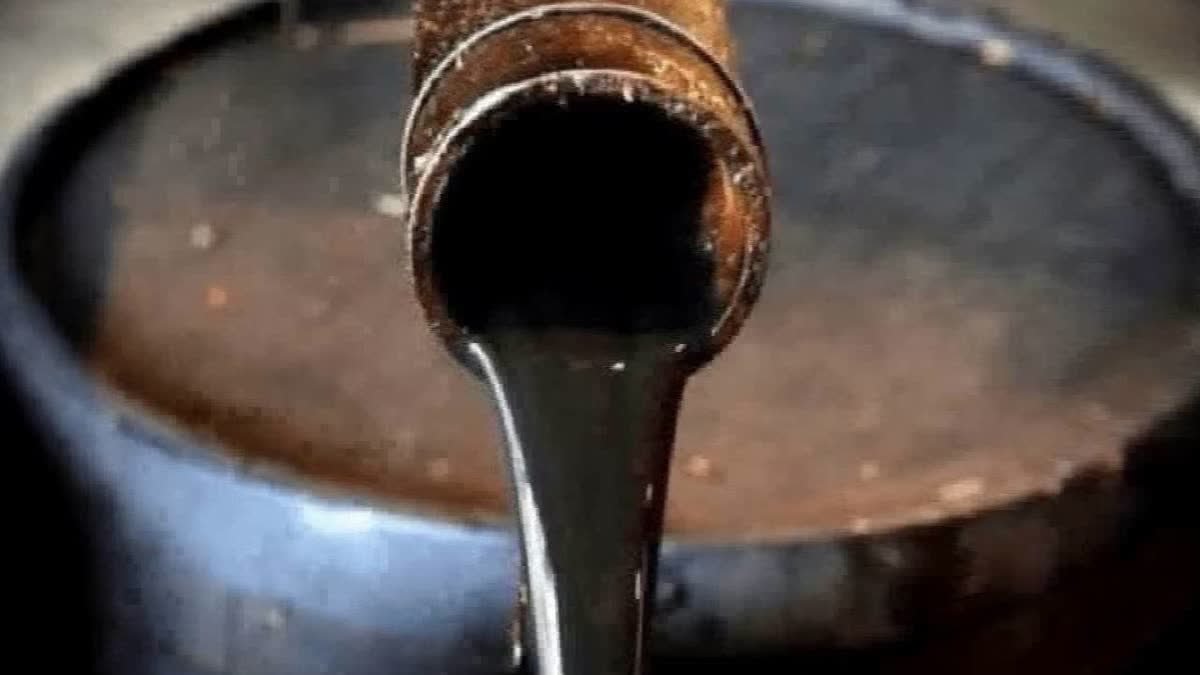

New Delhi: As global energy supply chains face disruptions amid the ongoing US-Israel war on Iran, the Centre’s decision to temporarily relax petroleum safety and licensing norms for kerosene distribution, has triggered an unexpected revival of a fuel India had nearly phased out. From a surge in kerosene stove sales to renewed policy debates, it’s bringing back memories of an era when ‘mitti ka tel‘ was a household staple, while also raising serious concerns over health, safety and environmental impact.
The Ministry of Petroleum and Natural Gas, in its Sunday notification, allowed ad-hoc distribution of kerosene for cooking and lighting across 21 states and Union Territories, to cushion households against LPG supply disruptions. But experts caution that it risks undoing decades of progress in clean cooking fuel adoption.
Expert flags policy reversal
Sudhir Bisht, a petroleum industry veteran, strongly criticised the move, calling it a step backward. He told ETV Bharat, “Kerosene was phased out of Delhi-NCR and all major cities, starting with 1995, when I was myself a deputy sales manager in Delhi. It started much earlier with blue dye being added to kerosene.”
“Blue dye was added to kerosene so that any adulteration at petrol pumps would be detected. However, it was felt that kerosene was a major pollutant and its smoke was primarily responsible for all respiratory linked diseases among especially women. Delhi became kerosene-free by 1997-98, after LPG connections were distributed liberally and everybody started getting double cylinder connections for LPG.”
He added, “To allow sale of kerosene at petrol pumps will be a retrograde step. This must not happen. Electricity, which is available easily now, is better. India is electricity surplus and we are mainly using coal at NTPC plants. I think the government should subsidise electricity and ensure that people pay for the electricity, and the supply is maintained 24×7. Distributing kerosene at petrol pumps will be a highly retrograde step.”
How the Kerosene system works
The current distribution mechanism mirrors older Public Distribution System (PDS) practices, but with added flexibility. The government has allocated an additional 48,000 kilolitres of kerosene, which is being routed to state-designated agencies via PSU oil companies.
Kerosene is reaching consumers through two primary channels, fair price shops and selected petrol pumps. In addition to fuel pumps, new ration shops will be opened in rural areas to distribute small quantities of the fuel — around 0.5 litre per person each month).
Some company-owned fuel distribution locations will be allowed to keep kerosene in storage for resale, after meeting strict recording requirements that follow a specific procedure established by the Petroleum Explosives and Safety Organisation (PESO). There will be multiple ways to monitor the movement of kerosene, in order to discourage it from being diverted, given that kerosene has always been misappropriated as an additive for gasoline. Dealers will have to keep logs of where they store and distribute kerosene, and states will need to periodically check these records to clamp down on any signs of hoarding or black market sales.
Kerosene stove sales surge
On the ground, the impact has been swift and visible. Retailers in several states reported a sharp spike in demand for kerosene stoves, most of which had nearly vanished in recent years.
In some regions, traders say their entire stock of kerosene and diesel stoves was sold out in days. The price of kerosene has also increased significantly since the ration programme began, with some estimates indicating that kerosene stoves that previously cost Rs 1,500, has recently sold for almost Rs 2,800. Some diesel stoves are being sold on the black market for as much as Rs 30,000.
Roadside tea and food vendors, and low-income families, are pushing the rising demand for kerosene and stoves.
Health, safety and environmental concerns
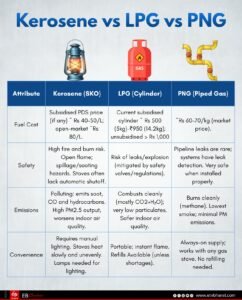
The return of kerosene raises the same concerns that led to its withdrawal from the market. High concentrations of air pollutants — like soot, carbon monoxide and unburnt/partially burnt hydrocarbon compounds — are found indoors, when cooking on kerosene stoves. Long-term exposure causes respiratory problems and eye irritation, especially in houses with poor ventilation.
Accidents from careless use, storage or movement are expected to rise. Also, kerosene is more carbon intensive than LPG and electricity, creating particulates that undermine India’s air quality objectives.
A fuel of the past
The amount of kerosene used in India has consistently fallen over the past decade due to government policies. Data from NSSO consumption and government reports indicate that kerosene usage had declined from 2012-13 to early-2024 by over 70 per cent, due to a rise in LPG adoption due to impactful schemes like Ujjwala, the Direct Benefit Transfer (DBT) for LPG (PAHAL), Direct Benefit Transfer for Kerosene (DBTK), and the near complete disappearance of kerosene from the PDS system.
Meanwhile, more than 100 million LPG connections were made available to the poor, increasing their access to clean burning cooking fuels.
By 2023-24, several states had completely eliminated PDS kerosene, and national consumption had fallen to a fraction of its peak level. The expansion of piped natural gas (PNG) networks and near-universal electricity access further diminished kerosene’s relevance.
Temporary relief or long-term risk?
While the government maintains that the measure is temporary and aimed at addressing an emergency, experts warn against normalising kerosene use.
On the positive side, kerosene offers a quick fallback during supply disruptions, as it can be produced domestically and distributed rapidly. However, its reintroduction risks fiscal strain due to subsidies, potential black market activity, and a reversal of clean energy gains.
Authorities have already flagged concerns over panic buying and rumours of shortages, urging states to enforce strict monitoring and public communication. Policy experts suggest that instead of reverting to kerosene, the government should strengthen alternative solutions, expand LPG subsidies for vulnerable groups, accelerate PNG, and promote electric cooking through incentives.

