

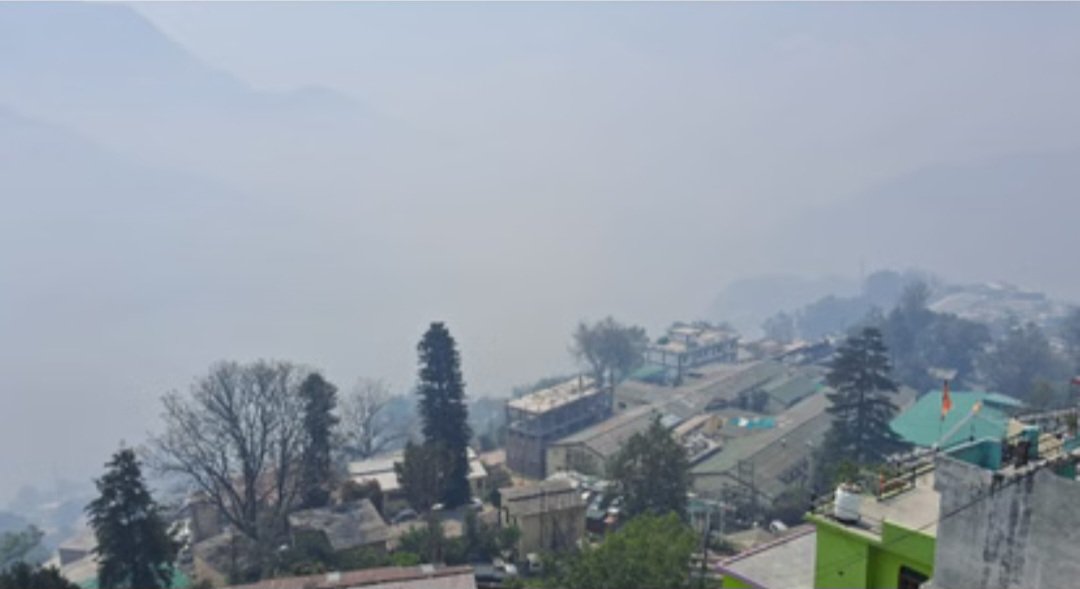

Today, the weather in Uttarakhand took a turn, shifting from the mountains to the plains. Due to intermittent rainfall and strong, cold winds, a drop of six degrees Celsius was recorded in the maximum temperature. Meanwhile, while the first week of April typically marks the onset of rising temperatures, this time around, a distinct chill persists in the air.
Clouds dominated the skies throughout the day, accompanied by intermittent light to moderate rainfall. The cold winds rendered the weather pleasant, offering people much-needed relief from the heat. The chill was felt more acutely during the morning and evening hours, prompting many to begin wearing light warm clothing.
**The Impact of Western Disturbances and Mountain Winds**
Meteorologists attribute this shift primarily to the activity of a Western Disturbance. Under the influence of this disturbance, skies remained overcast across the mountainous and plains regions of North India, resulting in ongoing rainfall. Furthermore, cold winds blowing in from the Himalayan regions caused a further dip in temperatures. Experts explain that when a Western Disturbance becomes active, it draws moisture from the Arabian Sea and the Mediterranean region. This very moisture leads to cloud formation and triggers rainfall. Consequently, direct sunlight is unable to reach the ground, resulting in a decline in temperature.
**Weather Conditions Expected to Remain Changeable**
The Meteorological Department has indicated that this weather pattern is likely to persist for the next few days. Temperatures are expected to remain below normal due to light rainfall, cloud cover, and cold winds. According to the forecast issued by the Meteorological Centre, an ‘Orange Alert’ has been issued for April 8. This alert warns of hailstorms accompanied by lightning, as well as strong gusty winds reaching speeds of up to 50 kilometers per hour, in parts of Dehradun—including Tehri, Pauri, Nainital, Champawat, and Udham Singh Nagar districts. A ‘Yellow Alert’ for lightning and strong winds has also been issued for other districts. Additionally, snowfall is anticipated in regions situated at altitudes exceeding 3,000 meters.

