

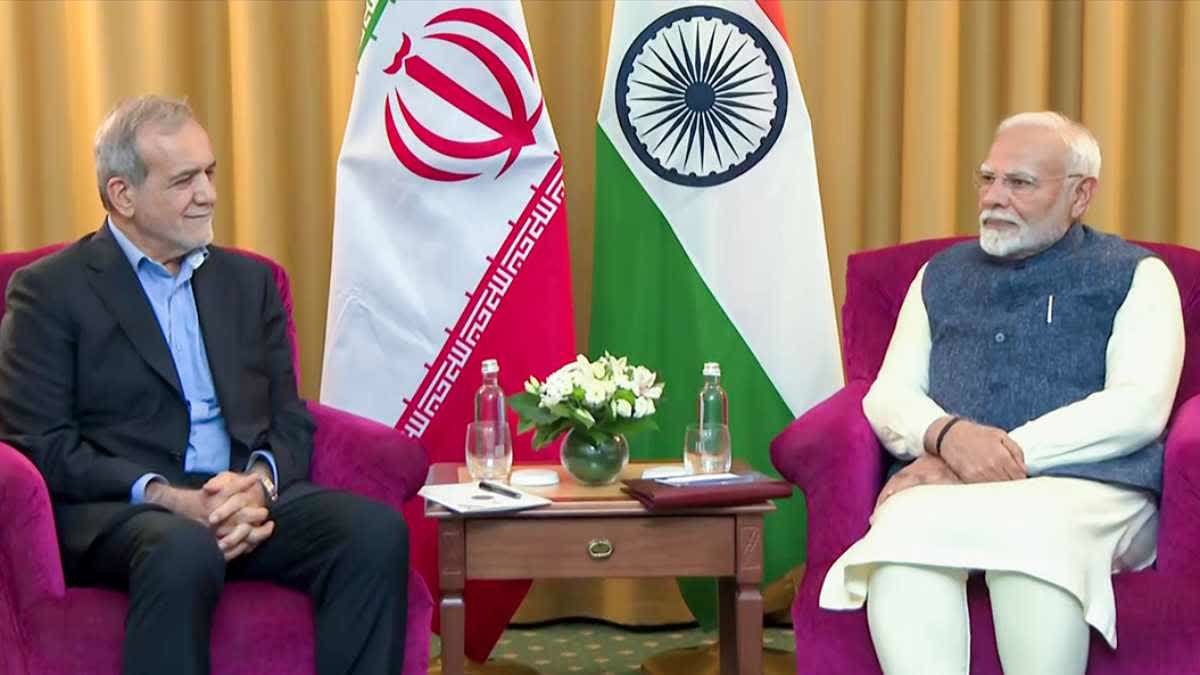

New Delhi: Amidst the ongoing conflict involving the US, Israel, and Iran, Prime Minister Narendra Modi spoke over the phone on Thursday night with Iranian President Masoud Pezeshkian and discussed the “grave situation” in West Asia. PM Modi expressed deep concern over the escalating tensions in the Middle East, as well as the loss of civilian lives and the damage inflicted upon civilian infrastructure.
Prime Minister Modi conveyed to the Iranian President that the safety and security of Indian citizens—along with the necessity for the unimpeded movement of goods and energy supplies—remain India’s foremost priorities. In a post on ‘X’, Modi stated, “Spoke with the President of Iran, Dr. Masoud Pezeshkian, regarding the grave situation in the region. Expressed deep concern over the escalating tensions, the loss of civilian lives, and the damage caused to civilian infrastructure.”
Prime Minister Modi also reiterated India’s unwavering commitment to peace and stability, appealing for dialogue and diplomacy as the means to resolve the crisis.
According to an official statement, Iranian President Pezeshkian briefed Prime Minister Modi on the current situation in Iran and shared his perspective on recent developments within the region. The statement added that both leaders agreed to remain in contact.
Notably, Iran has effectively closed off the Strait of Hormuz—a critical shipping lane through which a significant portion of India’s energy imports passes.
Just two days prior, Iranian forces opened fire on a bulk oil carrier bound for India as it attempted to navigate through the Strait of Hormuz.
Since the attacks launched by the US and Israel against Iran, PM Modi has, over the past 10 days, engaged in telephonic conversations with the leaders of several West Asian nations—including Oman, Kuwait, Bahrain, Saudi Arabia, the UAE, Jordan, Israel, and Qatar. During these calls, he expressed concern regarding the attacks targeting their respective countries and condemned the violations of the sovereignty and territorial integrity of certain nations. He also discussed the welfare and security of the Indian diaspora residing in the Gulf countries. On February 28, Iran’s Supreme Leader, Ayatollah Ali Khamenei, was killed in joint attacks by the United States and Israel. In retaliation, Iran launched drone and missile attacks against U.S. military bases in Israel and the Gulf nations, including the global business and aviation hubs of Dubai and Doha.

