

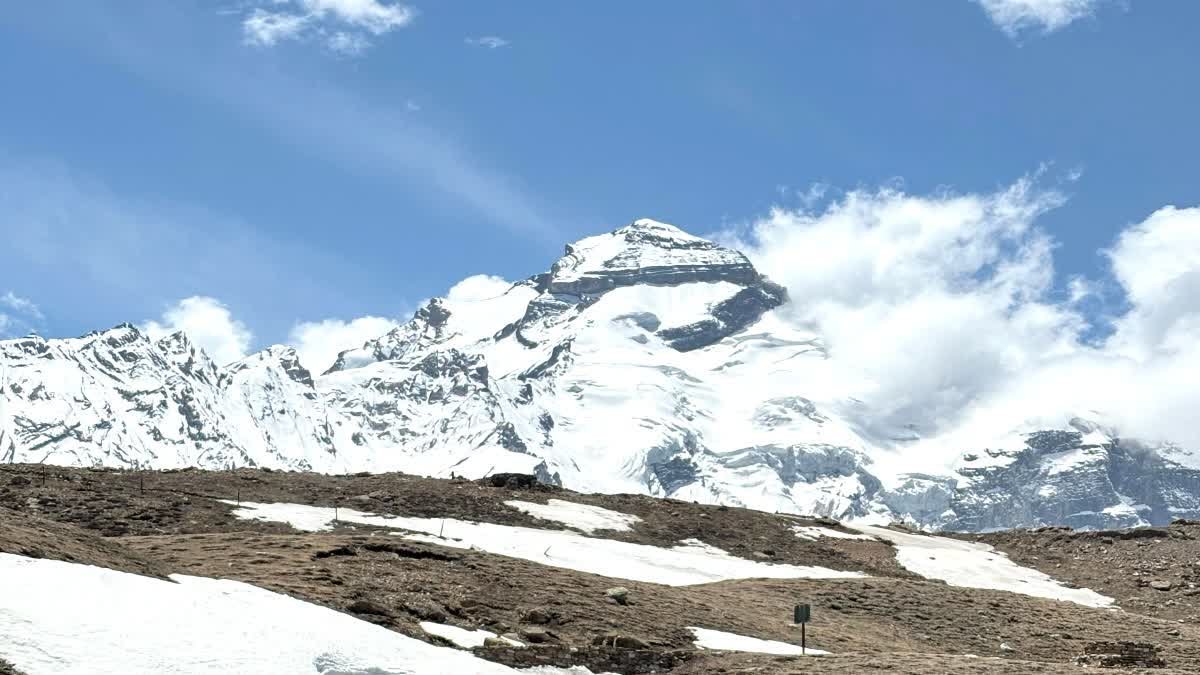

Pithoragarh: To facilitate and facilitate safe access to the Vyas Valley in Pithoragarh, adjacent to the China border, on the Om Parvat Kailash Mansarovar Yatra route, the central government will construct a 5.4-kilometer-long tunnel. Union Minister of State for Road Transport and Highways Ajay Tamta announced this in Pithoragarh. He stated that the tunnel, to be built from Bundi to Garbyang, will reduce the distance by 22 kilometers.
Tunnel planned on the fragile hillside of Chhayalekh: Union Minister Ajay Tamta stated that approximately 90% of the work on the Dharchula-Lipulekh road has been completed. However, the difficult road conditions and the fragile hillside in the Chhayalekh area are preventing heavy vehicles from reaching the area. In response to this problem, a tunnel has been planned. A 5.4-kilometer-long tunnel from Bundi to Garbyang: Currently, the tunnel’s DPR (Detailed Project Report) is in its final stages. The tunnel’s construction will reduce the road distance by 22 kilometers. Union Minister of State for Road Transport and Highways Ajay Tamta also provided information on the issue of land acquisition. He stated that compensation of ₹137 crore will be paid for the land acquired for the road construction, of which 60 percent has been transferred to people’s accounts. Work is progressing at a rapid pace from Tawaghat to Kalapani.
A major step for strategic and tourism: The Dharchula-Gunji-Lipulekh road is strategically important. This area borders China and Nepal. The Army, ITBP, and SSB are deployed here. The tunnel’s construction will further strengthen India’s strategic access to the borders. Villagers will benefit from the convenience of traveling to and from six villages, including Gartyang, Napalchu, Rangkang, Gunji, Nabi, and Kuti.
Tourism will receive a boost: The tunnel will allow tourists to easily access Adi Kailash and Om Parvat. The serpentine road on the Chhayalekh hill from Dharchula to Gunji is extremely dangerous, with 27 turns at a steep 90-degree angle. During the rainy season, the road is often blocked by debris. Consequently, the tunnel construction process has been initiated. The 5.4-kilometer-long tunnel from Bundi to Garbyang: The DPR (Detailed Project Report) for the tunnel is currently in its final stages. The tunnel’s construction will reduce the road distance by 22 kilometers. Union Minister of State for Road Transport and Highways Ajay Tamta also addressed the issue of land acquisition. He stated that compensation of ₹137 crore will be paid for the land acquired for the road construction. Of this, 60 percent of the funds have been transferred to people’s accounts. Work is progressing rapidly from Tawaghat to Kalapani.
Major Step for Strategic and Tourism: The Dharchula-Gunji-Lipulekh road is strategically important. This area borders China and Nepal. The Army, ITBP, and SSB are deployed here. The construction of the tunnel will strengthen India’s strategic access to the borders. Villagers will benefit from the convenience of traveling to and from six villages, including Gartyang, Napalchu, Rangkang, Gunji, Nabi, and Kuti.
Tourism Boost: The tunnel will allow tourists to easily visit Adi Kailash and Om Parvat. The serpentine road on the Chhialekh hill from Dharchula to Gunji is extremely dangerous, with 27 turns on a steep 90-degree slope. During rainy season, debris often blocks the road. This has prompted the tunnel construction process.

