

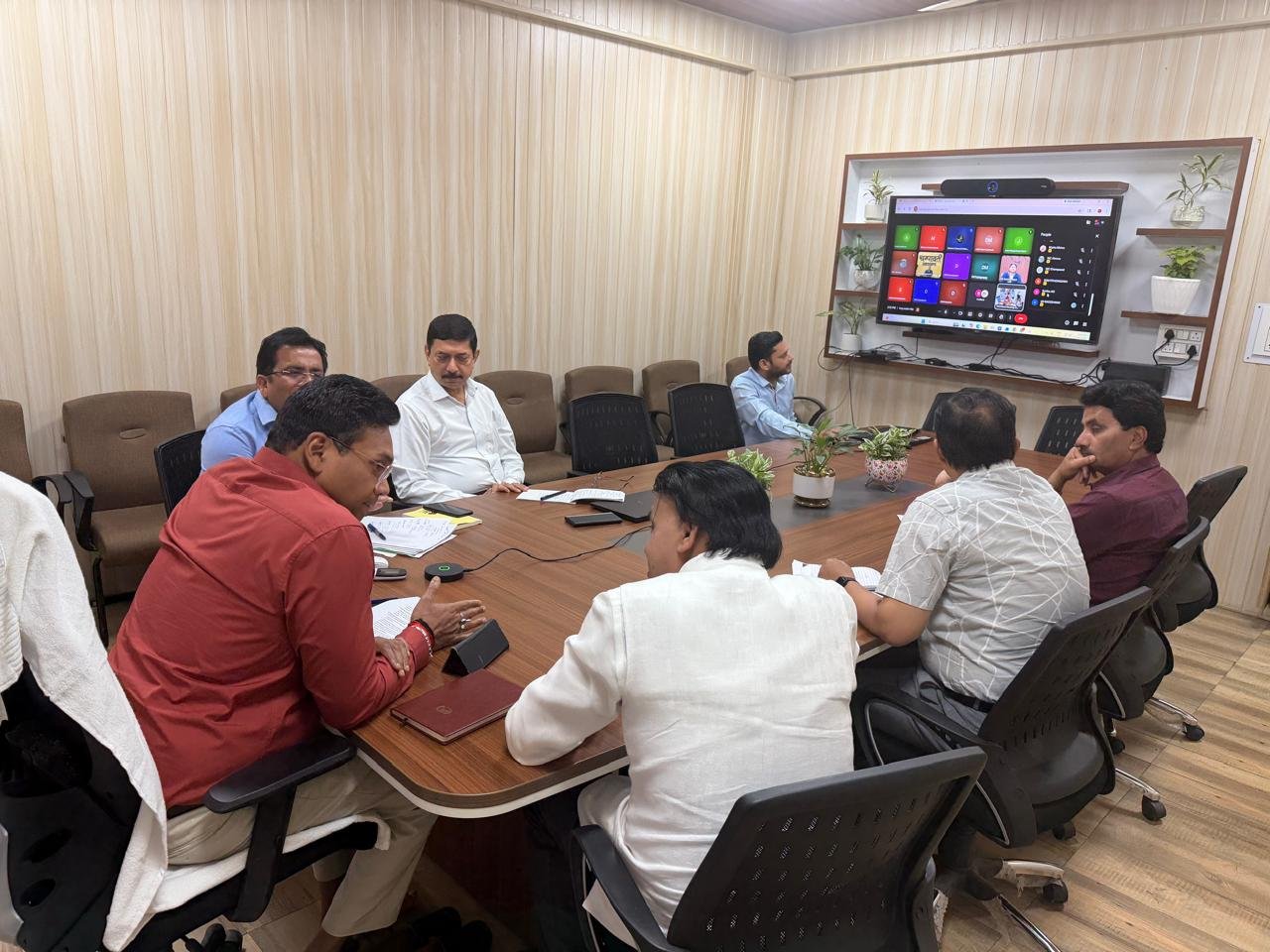

Under the guidance of Chief Minister Pushkar Singh Dhami, the Central Government’s ambitious scheme—the Urban Challenge Fund (UCF)—is set to prove a significant boon for Uttarakhand, aiming at the holistic development of the state’s urban areas, the creation of modern infrastructure, and the financial empowerment of its urban local bodies. A crucial meeting was held at the State Secretariat, presided over by Housing Secretary Dr. R. Rajesh Kumar. The meeting was attended by senior officials and staff from the Housing and Urban Development departments, including Additional Secretary (Housing) Vinod Giri. During this pivotal meeting, the Directorate of Urban Development (Government of Uttarakhand) issued guidelines regarding the scheme, stipulating that the state’s urban local bodies will formulate and submit project proposals to the Central Government on a competitive basis.
*₹1 Lakh Crore National Scheme: Special Benefits for Uttarakhand*
Under this scheme, administered by the Ministry of Housing and Urban Affairs (MoHUA), Government of India, central assistance amounting to ₹1 lakh crore will be made available across the country. The scheme is slated to remain in effect from the financial year 2025-26 through 2030-31 and may be extended by up to three years if deemed necessary. The primary objective of the scheme is to attract substantial investment into cities, thereby establishing them as new hubs of development. Chief Minister Pushkar Singh Dhami has directed officials to ensure that Uttarakhand’s urban local bodies derive maximum benefit from this scheme and to prepare high-quality proposals within a stipulated timeframe, with the aim of equipping the state’s cities with modern amenities.
*Additional Advantages for Uttarakhand as a ‘Hill State’*
Uttarakhand is poised to receive special benefits under this scheme by virtue of its status as a ‘hill state’; consequently, all 108 of its urban local bodies will fall within the ambit of the Credit Repayment Guarantee Scheme. This provision will enable even smaller Municipal Councils and Nagar Panchayats to undertake major development projects by securing bank loans. Furthermore, urban bodies with limited financial capacity will now be empowered to accelerate the implementation of their development plans.
*Development Proposals to be Submitted Across Three Key Sectors*
Under the framework of this scheme, urban local bodies have been invited to submit project proposals across three primary sectors. The first sector is Water and Sanitation, which encompasses drinking water supply, sewerage networks, sewage treatment, stormwater drainage systems, and solid waste management. Second is ‘Creative Redevelopment,’ under which old city areas, markets, heritage sites, and public spaces will undergo revitalization. Third is ‘Cities as Growth Hubs,’ wherein priority will be given to schemes aimed at developing cities as centers for tourism, education, industry, and trade.
*Many Cities in the State to Benefit*
The State Government has also identified examples of potential projects. Proposals related to industrial, pilgrimage tourism, and educational infrastructure may be formulated for cities such as Rishikesh, Dehradun, Haridwar, Haldwani, Kashipur, Roorkee, Srinagar, Ramnagar, and Rudrapur.
*50 Percent Market Finance Mandatory*
The most critical condition of the scheme is that at least 50 percent of the total project cost must be raised through ‘Market Finance’—specifically, bank loans, bonds, or the Public-Private Partnership (PPP) model. The Central Government will contribute 25 percent, while the remaining 25 percent will be borne by the State Government or the respective Urban Local Bodies. This initiative aims to foster financial discipline and self-reliance among urban local bodies.
*Funding to be Performance-Based*
The process for releasing funds has also been structured in a phased and performance-based manner. Following approval, Central assistance will be disbursed in three tranches: the first installment comprising 30 percent, the second 50 percent, and the final installment 20 percent. For the release of subsequent installments, physical progress of the project, geo-tagging, and independent verification will be mandatory.
*Several Reform-Related Conditions Also Apply*
Reform-oriented conditions have also been incorporated into the scheme. Urban Local Bodies are required to undertake measures such as property tax reforms, maintaining audited financial accounts, providing digital citizen services, conducting GIS-based surveys, implementing online monitoring systems, improving water supply, managing solid waste, and adopting climate-resilient urban planning.
*Chief Minister Directs Swift Action*
Chief Minister Pushkar Singh Dhami has directed officials to promptly identify priority projects within their respective jurisdictions, prepare ‘Concept Notes,’ and formulate Detailed Project Reports (DPRs) for timely submission to the Central Government. He emphasized that the government’s priority is to transform the state’s cities into clean, accessible, modern, and investment-friendly urban centers. *A Roadmap for Uttarakhand’s Urban Future*
The Urban Challenge Fund is not merely a scheme for the cities of Uttarakhand; it has the potential to serve as a comprehensive roadmap for urban development in the years to come. Under the leadership of Chief Minister Pushkar Singh Dhami, this initiative is being hailed as a pivotal step toward transforming the urban landscape of the state.
*Housing Secretary Dr. R. Rajesh Kumar Describes It as a Transformative Scheme*
Housing Secretary Dr. R. Rajesh Kumar stated that the Urban Challenge Fund is poised to prove itself as an immensely significant and transformative initiative for Uttarakhand’s urban development. Under the guidance of Chief Minister Pushkar Singh Dhami, the state government is working expeditiously to ensure that all urban local bodies derive the maximum benefit from this scheme. He noted that, given Uttarakhand’s unique hilly topography, the local urban bodies here will receive special benefits, thereby enabling the expansion of basic infrastructure and amenities even in smaller towns and *Nagar Panchayats* (town councils). Dr. R. Rajesh Kumar emphasized that the state government is placing special stress on encouraging urban local bodies to formulate high-quality and practical project proposals. Priority will be accorded to projects related to water supply, sewerage, sanitation, traffic management, tourism infrastructure, the redevelopment of historic city zones, and digital services. He added that this scheme aims to make the cities self-reliant…

