

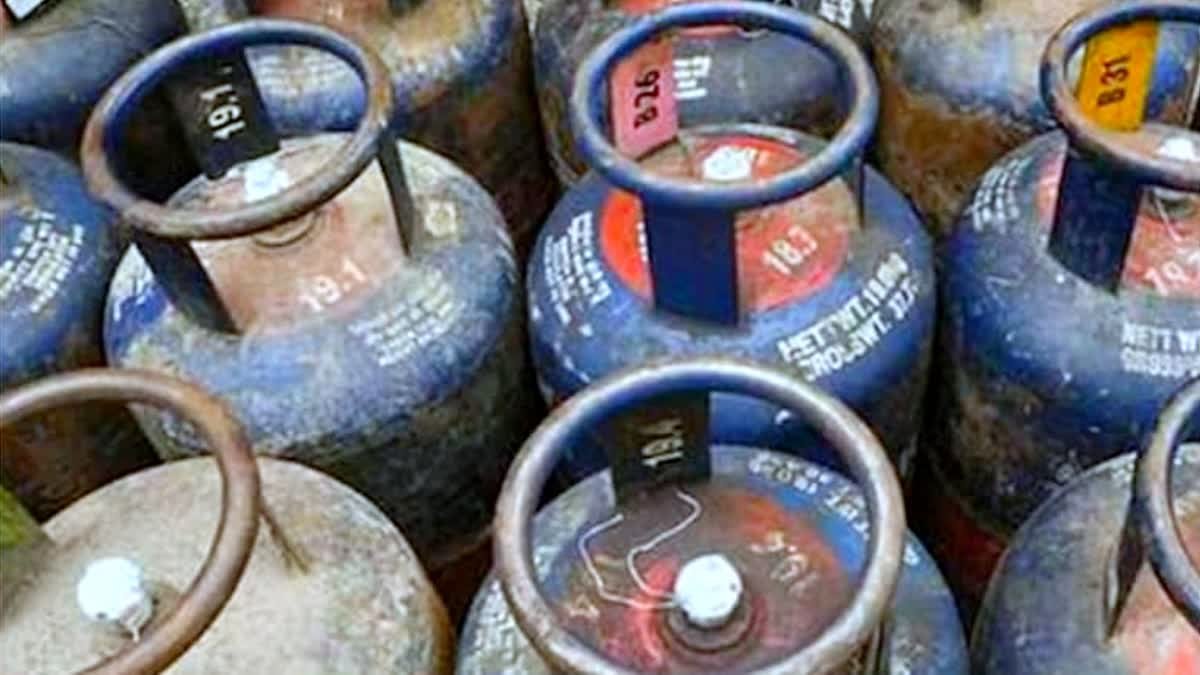

New Delhi: Ongoing geopolitical tensions involving Iran, Israel, and the US have started disrupting the supply of commercial LPG in India, causing major operational challenges for the country’s restaurant industry.
Several stakeholders of the sector claimed that their establishments are facing fuel shortages that have forced many to reduce operating hours, limit menus, or temporarily close, impacting both service delivery and profitability.
The worst affected among them are independent neighbourhood outlets, quick-service restaurants, large hotel kitchens and organised food service chains.
Industry stakeholders said that restaurants typically function on tight supply cycles for cooking fuel, and any interruption can quickly disrupt service delivery, menu planning, and overall efficiency. “In several cases, establishments have been forced to limit operating hours or modify their menus to manage available resources,” they said.
Rajan Sehgal, Co-Chair of the Tourism & Hospitality Committee, Chamber of Commerce and Industry of India (PHD CCI), said that the restaurants and food service establishments were facing rising operational costs, driven by energy price volatility, constraints in the supply of commercial LPG, and ongoing supply chain disruptions.
These challenges, he said, had significantly affected food procurement and logistics, placing additional strain on the industry’s day-to-day functioning.
“India’s tourism sector remains fundamentally resilient, supported by a large domestic travel market, expanding aviation connectivity and growing international interest in India’s cultural, spiritual and experiential tourism offerings,” he stated.
Improving energy supply stability for the hospitality and restaurant sectors—through measures such as expanding piped natural gas (PNG) infrastructure and more efficient governance of LPG supply—can play a crucial role in reducing operational disruptions and limiting cost volatility. These steps would enhance reliability in fuel access, enabling businesses to maintain consistent operations and better manage expenses.
PHDCCI’s Chair for the Tourism & Hospitality Committee, Anil Parashar, said that despite a good footfall of foreign tourists and stable occupancy levels driven by domestic tourism, profitability remains under pressure.
“The disruption in LPG supply has pushed India’s restaurant industry into a deep operational crisis, according to him. “What began as a supply constraint has now evolved into a widespread challenge affecting both businesses and consumers alike.”
Nearly 10 per cent of restaurants across affected regions have been forced to temporarily shut down, unable to sustain daily operations without reliable fuel access. Meanwhile, a significant 60–70 per cent of establishments have turned to coping mechanisms: shifting to induction cooking, exploring alternate fuels, trimming menus, or reducing operating hours to navigate the uncertainty.
Industry estimates indicate that dining-out frequency has declined by 8–10 per cent, while average customer spending has dropped by 6–8 per cent. The combined effect is a noticeable slowdown in overall industry throughput, reflecting weakening demand alongside constrained supply.
“Inside restaurant kitchens, the changes are visible. Shortened menus, limited service hours, and a growing reliance on induction-based equipment highlight the sector’s attempt to maintain continuity in the face of unpredictable fuel availability. However, these adaptations come at a cost—impacting not just operational efficiency but also the quality, variety, and consistency of customer experience,” it added.
The broader economic implications are significant. Beyond immediate revenue losses, the disruption is straining the interconnected ecosystem of suppliers, logistics providers, and service staff that the hospitality sector depends upon. As the crisis unfolds, it underscores the vulnerability of an industry built on precision, timing, and uninterrupted energy access.
According to industry estimates, the Indian food services market valued at Rs 5.69 lakh crore in 2024 and projected to reach Rs 7.76 lakh crore by 2028 is expected to reach an estimated Rs 6.46 lakh crore in 2026, translating into around Rs 17,700 crore in daily economic activity across the sector.

