

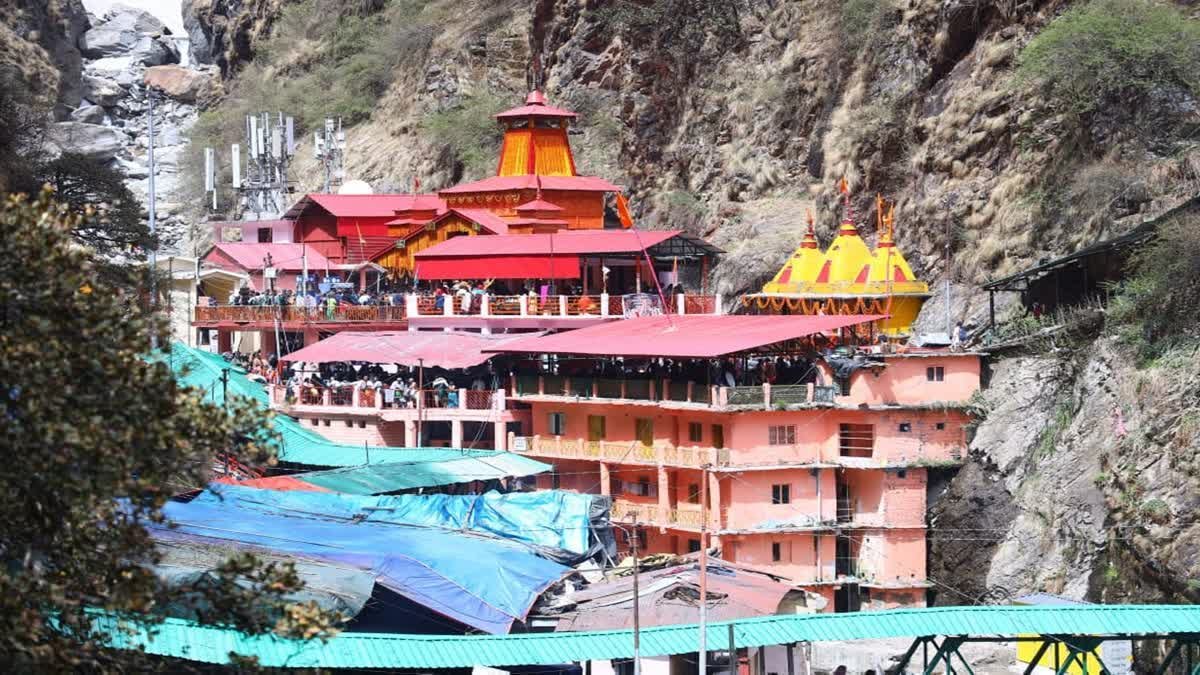

Uttarkashi (Uttarakhand): The gates of Yamunotri Dham will be opened for devotees for a period of six months on the upcoming April 19th, coinciding with the auspicious occasion of Akshay Tritiya. The gates of Yamunotri Dham are scheduled to open at 12:35 PM—aligned with the *Karka Lagna* (Cancer Ascendant), *Krittika Nakshatra*, and *Ayushman Yoga*—following a special ritualistic worship ceremony to allow devotees to offer their prayers and seek *darshan*. On Tuesday, on the occasion of *Yamuna Janmotsav* (Yamuna’s Birth Anniversary), the auspicious time for opening the gates of Yamunotri Dham was determined under the leadership of the Yamunotri Temple Committee at Kharsali village, the winter abode of Goddess Yamuna.
Purushottam Uniyal, the spokesperson for the Temple Committee, stated that prior to this event, the *Doli* (palanquin) of Goddess Yamuna will depart from Kharsali village at 8:45 AM. Accompanied by traditional local musical instruments and resounding chants of “Jai Yamuna” (Victory to Yamuna), the Goddess’s palanquin will set out from Kharsali village towards Yamunotri. From Kharsali village, the palanquin of Yamuna’s brother—Lord Shani Dev (Someshwar Maharaj)—will also proceed to Yamunotri to bid farewell to his sister. Meanwhile, the date for the opening of the gates of Gangotri Dham had already been announced by the *Teerth Purohits* (pilgrimage priests) on the first day of *Chaitra Navratri*. The gates of Gangotri Dham are also scheduled to open for devotees for a six-month period on the upcoming April 19th, the day of Akshay Tritiya.
Yamuna Jayanti Celebrated with Great Fervor: Yamuna Jayanti is observed on the *Chaitra Shukla Shashthi Tithi* (the sixth day of the waxing moon phase in the month of Chaitra). It is celebrated as the birth anniversary of Goddess Yamuna on Earth. In the *Padma Purana*, the Yamuna River is described as *Pap Nashini* (destroyer of sins), *Shok Harini* (remover of sorrow), and *Kalyani* (the benevolent one). It is widely believed that any individual who takes a holy dip in the waters of the Yamuna River—the daughter of Lord Surya (the Sun God) and the sister of Lord Yama—attains liberation from their sins. It is worth noting that the Uttarkashi district of Uttarakhand state serves as the source (*origin*) for two of India’s major rivers: the Ganges and the Yamuna. While the River Ganga originates at Gaumukh, situated at an altitude of approximately 3,892 meters above sea level, the River Yamuna originates from Mount Kalindi, located at an altitude of 4,421 meters above sea level.
**Mother Yamuna’s Winter Abode:** Kharsali serves as the winter residence and temple for Mother Yamuna. Once the portals of the Yamunotri Temple close for the winter season, worship and rituals dedicated to Mother Yamuna are performed with full traditional rites at this winter abode for the entire six-month duration of winter. Here, Mother Yamuna is revered with the status of a beloved daughter. Upon the closing of the temple portals, the ceremonial palanquin (*Doli*) carrying Mother Yamuna is welcomed just as a daughter returning to her maternal home would be; conversely, upon the reopening of the portals, her departure is bid farewell with the same affection accorded to a daughter leaving her home. Much like the Ganga, the Yamuna is not merely a river, but the very foundation of life.
Along the Yamunotri pilgrimage route—spanning from Charasu to the final staging post of Jankichatti, and from Damta to Barkot—various establishments ranging from small hotels to large restaurants and *dhabas* (roadside eateries) come alive with activity as pilgrims arrive for the Yamunotri *Yatra*. However, with the closing of the temple portals, a profound silence descends upon these establishments. Conversely, as the date for the reopening of the portals draws near, a renewed sense of enthusiasm and excitement permeates the local businesses associated with the pilgrimage. Furthermore, those who operate horses, mules, *dandis* (palanquins), and *kandis* (basket-carriers) along the pedestrian trail to Yamunotri also derive their livelihood directly from this annual pilgrimage.

