

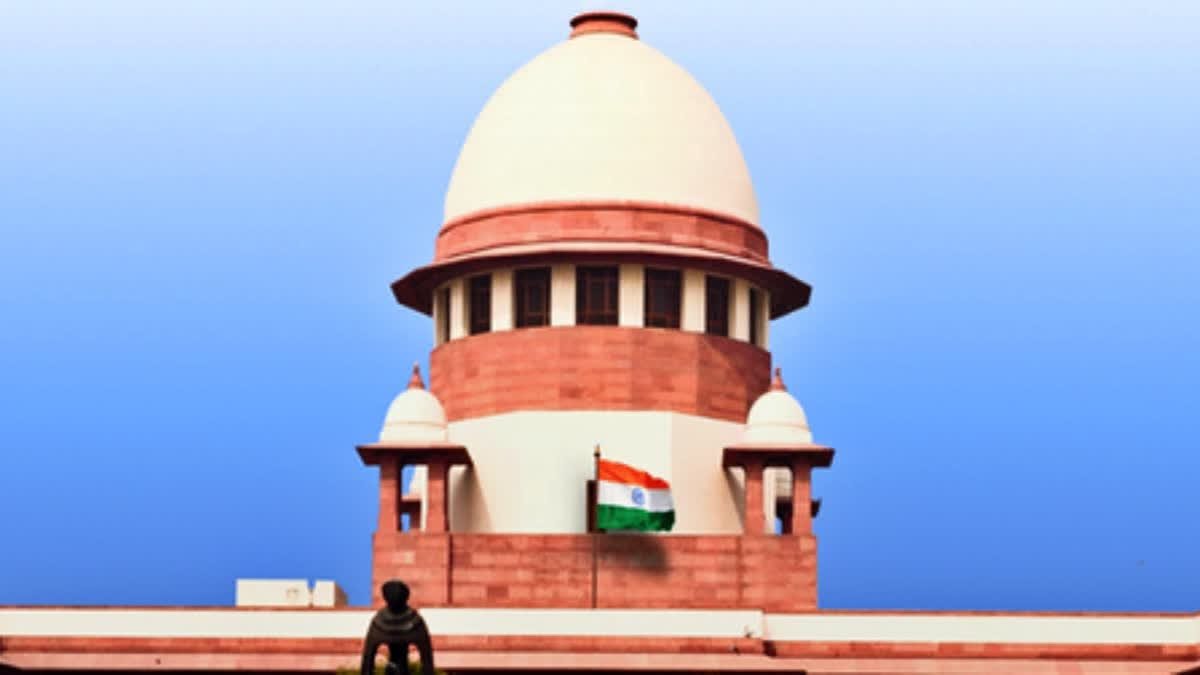

New Delhi: The Supreme Court on Friday ruled that a lawyer cannot be summoned in connection with legal advice given in a criminal case, unless the case falls under an exception to Section 132 of the Indian Evidence Act (BSA).
The decision was delivered by a bench headed by Chief Justice of India B.R. Gavai, and comprising Justices K. Vinod Chandran and N.V. Anjaria.
The bench stated that investigating officers cannot summon lawyers representing accused persons to inquire about the details of a case, unless the case falls under an exception under Section 132.
The bench stated that Section 132 of the BSA is a privilege granted to lawyers. The Supreme Court quashed the summons issued by the Enforcement Directorate to two senior lawyers and issued guidelines prohibiting investigating agencies from summoning lawyers to question them about the legal advice they provide to their clients.
The bench delivered its verdict in a suo motu case filed after a central agency issued summons to two senior lawyers.
Delivering the verdict on behalf of the bench, Justice Chandran said the court had attempted to “consistently align the exemptions in the rule” to protect lawyers.
He added that the bench had issued new guidelines to protect the legal profession from undue pressure from investigating agencies. The bench clarified that summons to lawyers would not be issued without the consent of a senior officer not below the rank of Superintendent of Police, who would record a satisfaction regarding the exception to the provision.
The bench stated that no summons to lawyers could be issued to produce documents in civil and criminal cases.
In June this year, the Enforcement Directorate (ED) issued summons to senior advocates Arvind Datar and Pratap Venugopal under Section 50 of the Prevention of Money Laundering Act, 2002, in its investigation into the Employee Stock Option Plan (ESOP) granted by M/s Care Health Insurance Limited, seeking their alleged legal opinion in support of granting stock options to Rashmi Saluja, former chairperson of Religare Enterprises.
Bar bodies criticized this decision, calling it a move fraught with serious consequences for the independence of the legal profession and the fundamental principle of lawyer-client confidentiality. The central agency withdrew the summons.
On June 20, Vipin Nair, president of the Supreme Court Advocates on Record Association, urged the Chief Justice to take suo motu cognizance of the summons.

