

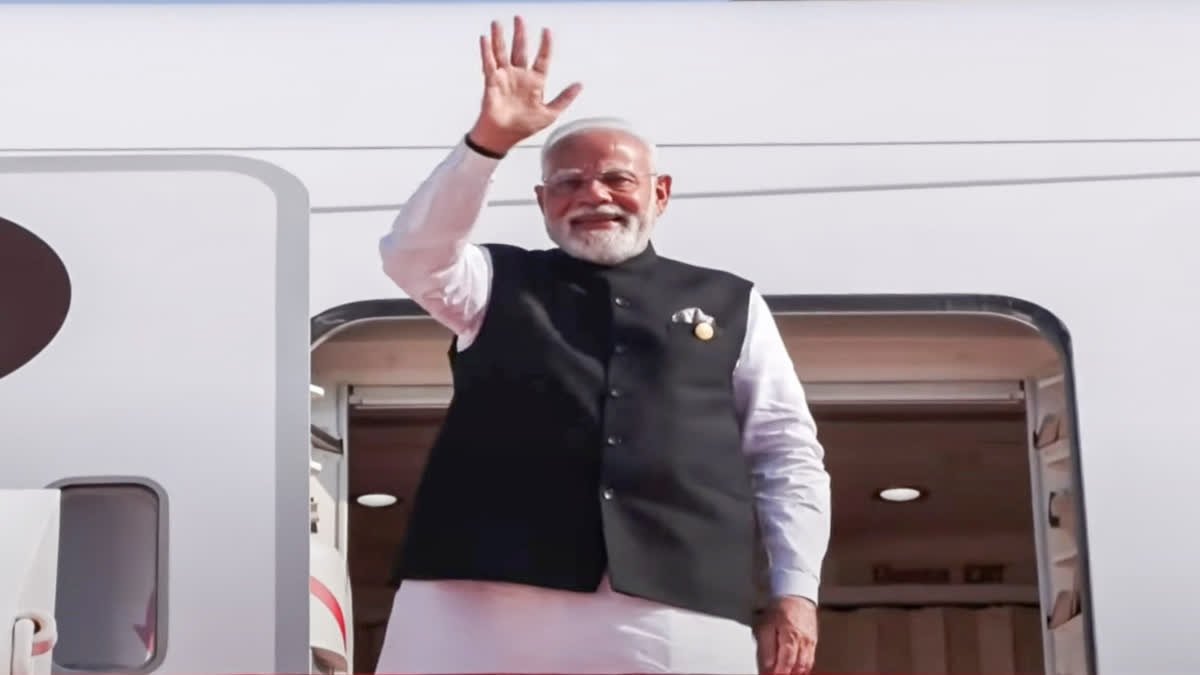

New Delhi: Prime Minister Narendra Modi has arrived in India on Monday after his visit to China and Japan. He attended the 15th India-Japan Annual Summit in Japan, while in China he attended the Shanghai Cooperation Organization (SCO) summit. During this, he also held bilateral meetings with Russian President Vladimir Putin and Chinese President Xi Jinping.
Earlier, PM Modi posted on X, “Concluded a successful visit to China, where I attended the SCO Summit and interacted with various world leaders. Also emphasized India’s stand on major global issues. Thanks to President Xi Jinping, the Chinese government and people for the successful organization of this summit.” Call for decisive action against terrorism
At the SCO summit, the Prime Minister called for decisive action against terrorism financing and radicalism. Referring to the recent Pahalgam terrorist attack, he urged the group to hold accountable those countries that promote and support cross-border terrorism. He also congratulated Kyrgyzstan on assuming the chairmanship of the SCO.
Several issues discussed at the summit
The summit saw extensive discussions on the SCO development strategy, reform of global governance, counter terrorism, peace and security, economic and financial cooperation, and sustainable development. In his address, Prime Minister Modi highlighted India’s vision of strengthening cooperation under the SCO framework and emphasized action on three key pillars – security, connectivity and opportunity.
Bilateral talks with President Xi Jinping
Prime Minister Modi on Sunday held bilateral talks with President Xi Jinping, where the two leaders welcomed the positive momentum and continued progress in bilateral relations since their meeting in Kazan during the BRICS summit in October 2024.
The two leaders emphasized that India and China are development partners, not rivals, and agreed that differences should not be allowed to turn into disputes. They stressed the need for stable relations based on mutual respect, mutual interest and mutual sensitivity—which are crucial for the development of the two countries as well as for the building of a multipolar Asia and a multipolar world.

