

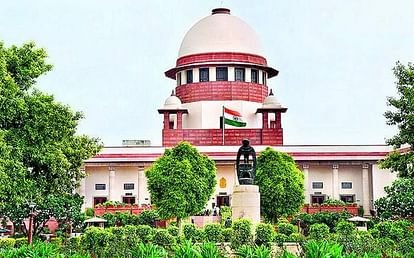

The Supreme Court has stayed the order of the Uttarakhand High Court which directed the State Election Commissioner to investigate whether an Additional District Magistrate, who can understand English but cannot speak, can effectively control the executive post. The Supreme Court has also issued notice to Akash Bora, who filed a PIL related to elections in the High Court, and 53 people who were accused of being included in the voter list here despite being residents of other states.
The case was heard before a bench of Chief Justice BR Gavai, Justice K Vinod Chandran and Justice NV Anjaria. The Uttarakhand High Court had directed that the State Election Commissioner and the Chief Secretary should investigate whether an officer of the Additional District Magistrate cadre who is unable to speak in English would be in a position to handle an executive post like Election Registration Officer (ERO) and control it effectively. This order of the High Court was challenged by the Election Commissioner of Uttarakhand and others through a special leave petition in the Supreme Court.
After the hearing, the Supreme Court directed to file a reply in four weeks and said that the decision and order of the Uttarakhand High Court dated 18 July 2025 will remain stayed till further orders. In the case, the High Court was also considering whether the family register is a document on which the Electoral Registration Officer can rely to finalize the voter list of each constituency. It was observed that there was no mention of family register in the Uttar Pradesh Registration Rules 1994 which were implemented after the Uttar Pradesh Panchayat Raj, Maintenance of Family Registers Rules 1970.
This was the case
Budhlakot resident Akash Bora had filed a PIL in the High Court saying that the names of 82 outsiders have been included in the voter list of his village. Most of them are from Odisha and other places. When he complained about this to the SDM, he constituted an inquiry committee. The inquiry committee observed the voter list and found that 18 people in it are from outside, but even after the final list was released, the names of the marked 18 people were not removed from the voter list. After filing the PIL, he presented a list of 30 other such people in the court. During the hearing, the commission said that some people have been marked.
While preparing the voter list, the BLO went door-to-door and marked the voters. The list was prepared on that basis, but the court asked the commission whether the voter’s Aadhaar card, voter ID or ration card or permanent residence related documents were checked when the voter list was prepared. If yes, then present the record of the same or their names were included in the voter list on the basis of the names being told verbally

