

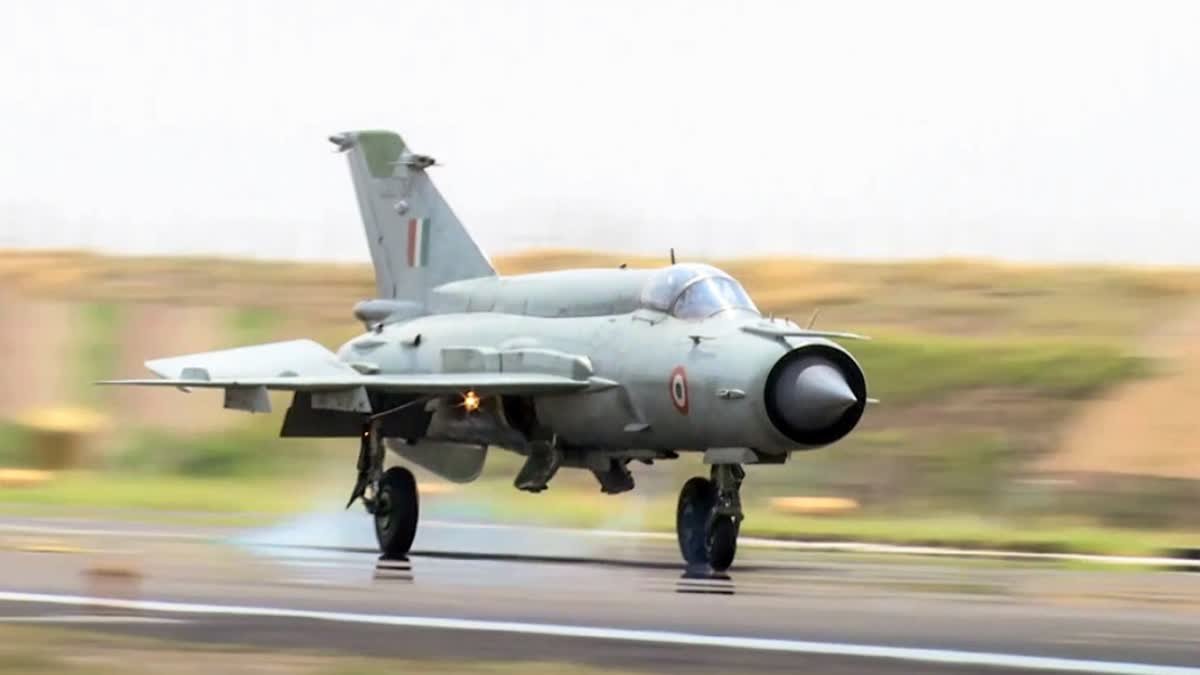

New Delhi: With the retirement of the MiG-21, the Indian Air Force has ended a historic chapter in Indian military aviation. This aircraft has left behind unmatched service and a legacy that will be remembered as India transitions to a new generation of fighter aircraft.
The Indian Air Force may replace the MiG-21 with the Tejas Light Combat Aircraft (LCA) Mark 1A. Considered the backbone of the Indian Air Force, the MiG-21’s nearly 60 years of service have been crucial in shaping India’s air power. The Air Force is preparing to phase out the MiG-21 fighter jet on September 26th. The Indian Air Force (IAF) paid a heartfelt tribute to its iconic MiG-21 fighter jet, celebrating its six decades of glorious service. In a post on Instagram, the IAF praised the aircraft, calling it “a warhorse that carried the nation’s pride to the skies.” The released video depicts the illustrious history of the MiG-21. Inducted in 1963, the MiG-21 has served for nearly six decades and has been the backbone of India’s air power. Its first squadron, 28 Squadron, established in Chandigarh, was nicknamed the “First Supersonics” as India’s first supersonic fighter aircraft.
The MiG-21 has played a significant role in numerous operations, including the 1971 war with Pakistan, where it proved its combat capability. Over the decades, it has trained generations of fighter pilots, many of whom find it challenging and rewarding.
In the 1971 war, MiG-21s attacked the Governor’s residence in Dhaka, resulting in Pakistan’s surrender. This aircraft has shot down numerous enemy fighter aircraft. From the F-104 in 1971 to the F-16 in 2019—making it one of the most battle-tested jet aircraft in the history of the Indian Air Force.
The MiG-21 was also used in the Kargil War. According to the Press Bureau of Information, it was often the first choice of commanders, as its unique characteristics, such as high agility, high speed, and quick turnaround, provided unmatched results.
The versatility of all MiG-21 variants has significantly shaped the IAF’s operational philosophy for decades. Pilots, engineers, and technicians who fly and maintain the MiG-21 have been strong advocates of its exceptional combat capability.
In addition to achieving major operational milestones, the MiG-21 also revolutionized the technological and manufacturing capabilities of the indigenous aerospace industry. The phaseout of the MiG-21FL will mark the end of an era of relentless performance, precision delivery, and intimidating performance.

