


New Delhi: An important meeting of the Joint Parliamentary Committee (JPC) on ‘One Nation, One Election’ was held in Parliament House on Wednesday. The meeting concerned the Constitutional 129th Amendment Bill, 2024, and the Union Territory Laws (Amendment) Bill, 2024, which propose simultaneous elections for the Lok Sabha and state assemblies. These bills were introduced in the Lok Sabha in December 2024 and then referred to the JPC.
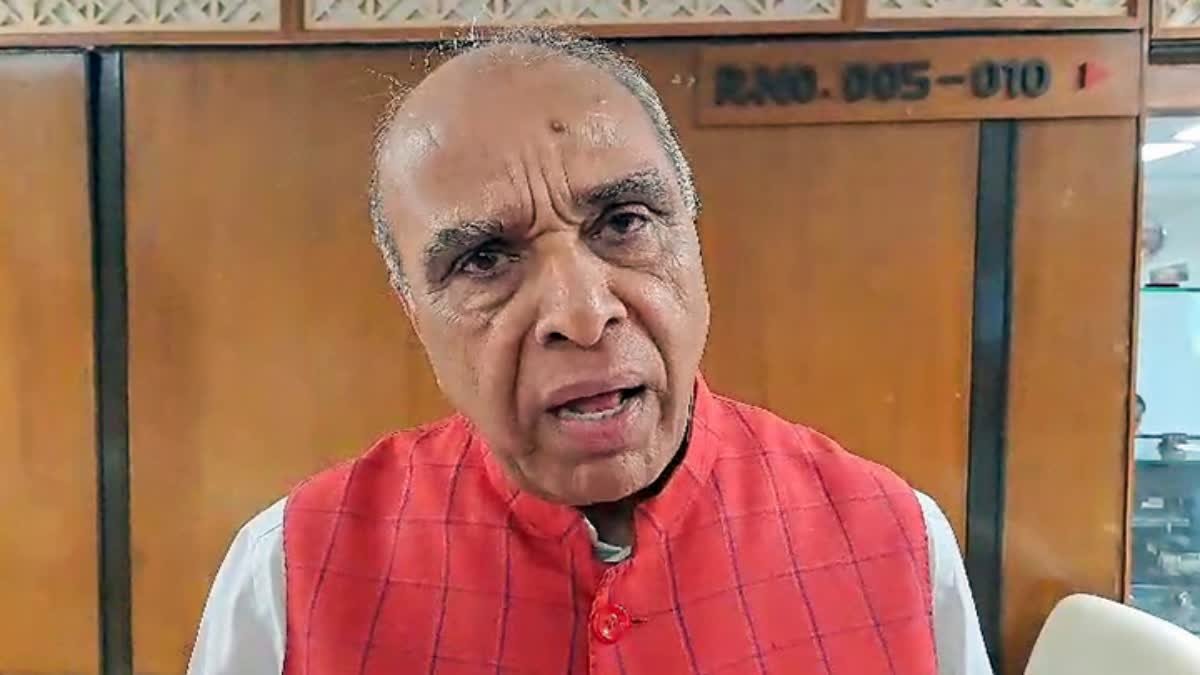
Committee Chairman BJP MP P.P. Chaudhary, speaking to the media before the meeting, said that simultaneous elections could help achieve the goal of a developed India 2047 ahead of schedule. The meeting discussed the economic benefits and challenges of simultaneous elections.
Economic experts, including Montek Singh Ahluwalia, Arvind Rajgarhia, and Surjit Bhalla, were also invited to the meeting. Committee members also discussed the impact on GDP. The committee meeting also mentioned the Ramnath Kovind Committee report.
Issues Discussed in the Meeting
According to sources, experts in the committee also argued that simultaneous elections would increase GDP by 1.6 percent, potentially benefiting the country by up to ₹7 lakh crore. Furthermore, the problems that would arise from implementing the Model Code of Conduct (MCC) due to frequent elections, along with the disruptions to development work and the associated problems faced by industries and the public, were also mentioned.
However, some opposition members also pointed out the disadvantages of simultaneous elections, and the pros and cons of simultaneous elections compared to staggered elections were considered.
13 Elections in a Five-Year Cycle
According to sources, Arvind Panagariya, former Chairman of the 16th Finance Commission, said in the meeting that India holds 13 elections in a five-year cycle, meaning an average of one election every 4.5 months. This hinders development. Simultaneous elections will accelerate growth, reduce fiscal waste, and ensure stable policymaking.
Economist Surjit Bhalla, who was present at the meeting, stated that simultaneous elections will reduce violence and accelerate policymaking and reforms. He emphasized economic savings and stability, while Montek Singh Ahluwalia also discussed the benefits in detail.
‘A Matter of National Interest’
Some opposition party MPs on the JPC also demanded clarification from the government on issues such as expenditure, administrative burden, and impact on the education system, calling it against the federal structure. JPC Chairman and BJP MP P.P. Chaudhary said that holding simultaneous elections could accelerate the realization of the dream of a developed India by 2047. This is not a political issue, but a matter of national interest.
He said that frequent elections put a strain on paramilitary forces, Election Commission personnel, and logistical systems. The MCC puts everything into election mode. It should be noted that the members of the JPC formed on One Nation One Election have held 12-13 meetings so far. The committee has also visited five states and one union territory.
Although no final decisions were made in today’s meeting, ruling party members described the discussion as constructive. Previously, the Lok Sabha extended the deadline for submitting the JPC report to August 12, 2025. The next meetings are scheduled in 2026, where additional experts can be consulted. The committee’s objective is to prepare a detailed report on the bills.

