


New Delhi: The Shaksgam Valley was once a part of Jammu and Kashmir. But after independence, when Pakistan attacked Jammu and Kashmir, it also seized this part of the territory. The Shaksgam Valley is included in the area under its control.
The dispute is not limited to this. Pakistan played another insidious trick. In 1963, it handed over the Shaksgam Valley to China, even though it is Indian territory. Pakistan did all this to appease China. It needed China’s support against India, so it took this step. Before 1963, a war had taken place between India and China in 1962, and Pakistan took advantage of this opportunity. However, India has never recognized this agreement between China and Pakistan. The Shaksgam Valley covers an area of 5180 square kilometers. It is located near the Karakoram Mountain Range, north of the Siachen Glacier. Strategically, it is very important.
Now, China is carrying out construction activities in this area. It is developing infrastructure there. China has declared it a part of the Belt and Road Initiative. India has objected to this. India has made it clear that this is its territory and Pakistan has no right to cede this land to any third country. The Indian Ministry of External Affairs (MEA) said that this is a violation of India’s sovereignty and that China’s project passes through the Pakistan-occupied Kashmir (PoK) area. India has consistently maintained that PoK is its territory, and therefore only India has the right to it.
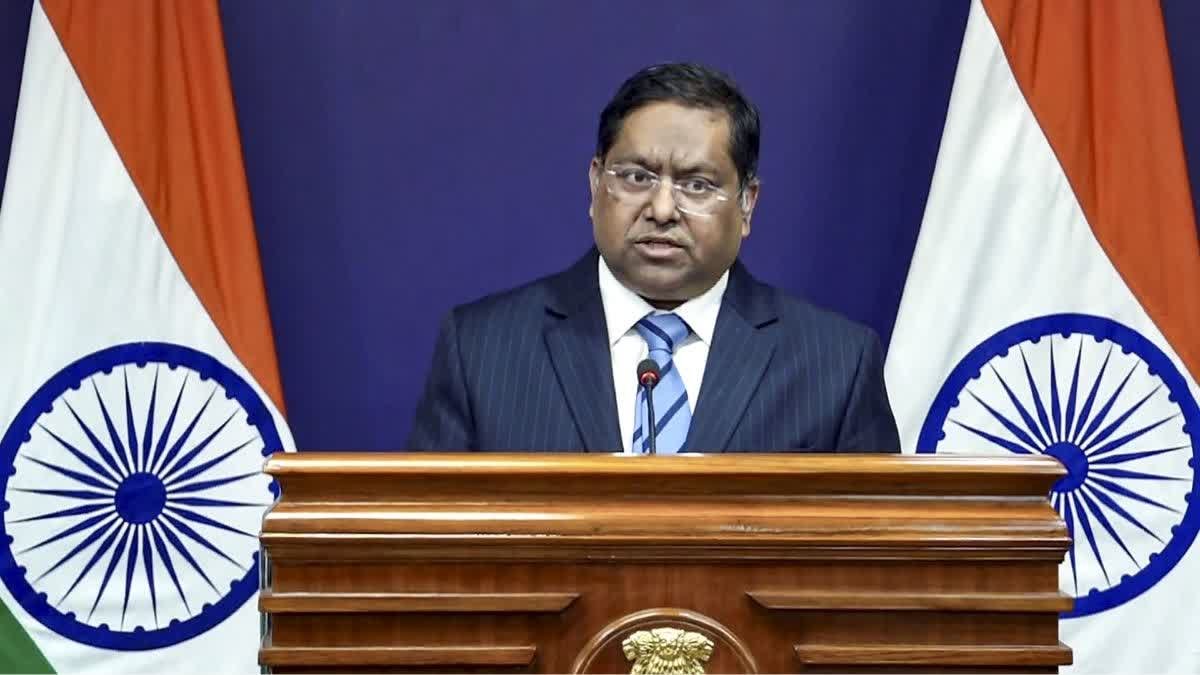
The immediate cause of the dispute is China’s road construction work in the region. China is building an all-weather road there. According to reports, China has completed 75 kilometers of the road. As soon as this information came to light, India objected. It said that if China continues to build roads in this area, it could increase tensions in relations between China and India. Indian Ministry of External Affairs spokesperson Randhir Jaiswal said that the 1963 Pakistan-China agreement is invalid from India’s perspective, and the Shaksgam Valley is Indian territory. India stated that the entire Jammu and Kashmir and Ladakh are an integral part of India, and Shaksgam is also a part of it, therefore there is no need to view it separately. The previous day, on Tuesday, Army Chief Upendra Dwivedi also mentioned this. He said that since India does not recognize the 1963 agreement, how can any construction work there be recognized?
In its statement, India said, “India has consistently protested to China against any attempts to alter the ground situation in the Shaksgam Valley. India reserves the right to take necessary steps to protect its interests.”
“The Shaksgam Valley is Indian territory. We have never recognized the so-called China-Pakistan border agreement of 1963. We have consistently maintained that this agreement is illegal and invalid. We also do not recognize the so-called China-Pakistan Economic Corridor (CPEC) as it passes through Indian territory illegally and forcibly occupied by Pakistan. The entire Union Territory of Jammu and Kashmir and Ladakh are an integral and inalienable part of India. This has been clearly conveyed to Pakistani and Chinese authorities on several occasions,” said Randhir Jaiswal, spokesperson for the Indian Ministry of External Affairs.
As soon as India protested against the road construction by China, the Chinese Ministry of Foreign Affairs responded. Chinese Foreign Ministry spokesperson Mao Ning said that the area to which India has objected is part of China. The spokesperson said that China is carrying out construction work in its own territory and has every right to do so. The Chinese spokesperson said that whatever China is doing is based on the Pakistan-China agreement, and China is fully committed to the BRI project. She said that their aim is to expand infrastructure facilities there to promote trade. The Chinese spokesperson also said that Jammu and Kashmir is a disputed territory and should be resolved under the UN Security Council resolutions. First of all, the region you are referring to is part of China. China’s infrastructure activities within its own territory are perfectly legitimate. China and Pakistan reached a border agreement in the 1960s, and the border between the two countries was demarcated. This is the right of China and Pakistan as sovereign states. The China-Pakistan Economic Corridor (CPEC) is an economic initiative aimed at promoting local economic and social development and improving people’s lives… Mao Ning, spokesperson for the Chinese Ministry of Foreign Affairs

