

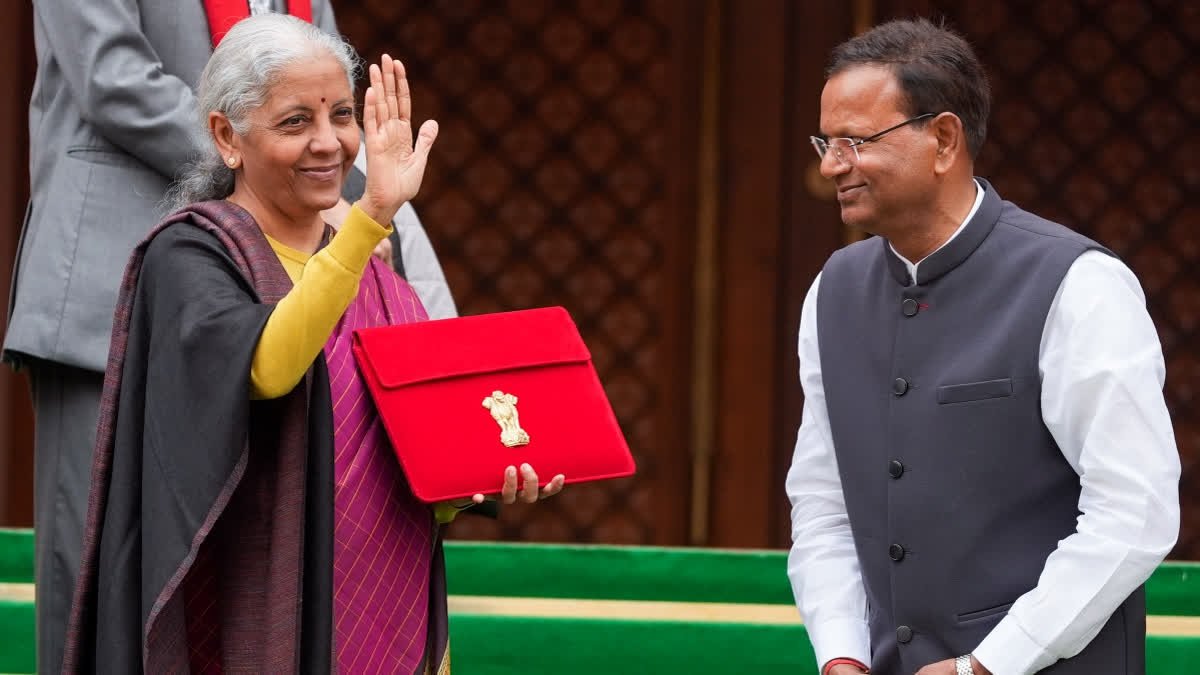

New Delhi: Experts in India’s healthcare sector have praised the announcements made by Finance Minister Nirmala Sitharaman in the Union Budget 2026-27 for the health sector. These include the proposal to establish three new All India Institutes of Ayurveda (AIIA) to promote high-quality education, the elimination of basic customs duty on 17 cancer-related drugs, and customs duty relief for seven more rare diseases.
Professor (Vd) Pradeep Kumar Prajapati, Director of the All India Institute of Ayurveda in Delhi, said, “This Union Budget has given greater focus to the Ayurveda sector. It is a matter of pride that three new AIIAs have been announced. Taking the Goa and Delhi AIIAs as role models, the proposed AIIAs will manage lifestyle disorders and other chronic diseases of the people.”
Finance Minister Sitharaman also announced in the budget the upgrading of AYUSH pharmacies and drug testing laboratories to higher certification standards, strengthening the quality assurance ecosystem for Ayurvedic and other traditional medicines, and increasing the demand for more skilled personnel.
The budget also proposes upgrading the WHO Global Centre for Traditional Medicine in Jamnagar, Gujarat, to further promote evidence-based research, training, and awareness in traditional medicine globally.
The budget also announced the establishment of AYUSH centers within the five proposed Regional Medical Value Tourism Hubs, integrating AYUSH services with diagnostics, post-care, and rehabilitation within larger medical tourism complexes. Sitharaman also announced that wellness and yoga would be included as essential skills in the new care ecosystem for the elderly and their caregivers. To achieve this, 1.5 lakh caregivers will be trained in the coming year through programs linked to the NSQF (National Skills Qualification Framework), thereby mainstreaming AYUSH-related skills in the healthcare workforce. Rajiv Nath, Forum Coordinator of the Association of Indian Medical Device Industry (AiMeD), said that the Union Budget 2026 sends a strong and credible signal of India’s commitment to building a globally competitive life sciences ecosystem.
He said, “The announcement of a BioPharma power initiative with an outlay of ₹10,000 crore over five years is a significant step towards making India a global biopharma manufacturing hub, especially in biologics and biosimilars, which are crucial for improving longevity and quality of life at affordable prices.”
He added that creating a network focused on biopharma, establishing three new NIPERs (National Institute of Pharmaceutical Education and Research), upgrading seven existing institutions, and a network of 1,000 accredited clinical trial sites across the country will significantly strengthen India’s research, talent, and clinical validation capabilities. “These measures address long-standing structural deficiencies from innovation to manufacturing,” Nath said.
He further stated that the budget emphasizes strengthening the Central Drugs Standard Control Organization (CDSCO) through dedicated scientific review capacity, domain specialists, and time-bound approvals, which are essential for regulatory predictability, global alignment, and investor confidence. Nath said, “For India’s $50 billion pharmaceutical industry, which contributes approximately 2.5 percent to the GDP, this budget reinforces the shift from volume-led growth to value- and innovation-driven leadership. These initiatives, coupled with the restoration of the 200 percent weighted R&D deduction and the extension of PLI support for advanced technologies, APIs, biosimilars, and complex generics, will further boost domestic manufacturing, reduce import dependence, and position India as a reliable global supplier of high-quality, affordable biopharmaceutical solutions.”
According to Nath, such incentives were previously sometimes extended to biomedical devices and medical equipment as well. He added, “We expect the reforms to continue, as assured by the Finance Minister, to make manufacturing competitive by reducing the burden of deregulation and regulatory compliance, so that we can become globally competitive and leverage the recent FTAs with the EU, EFTA, and the UK.”

