

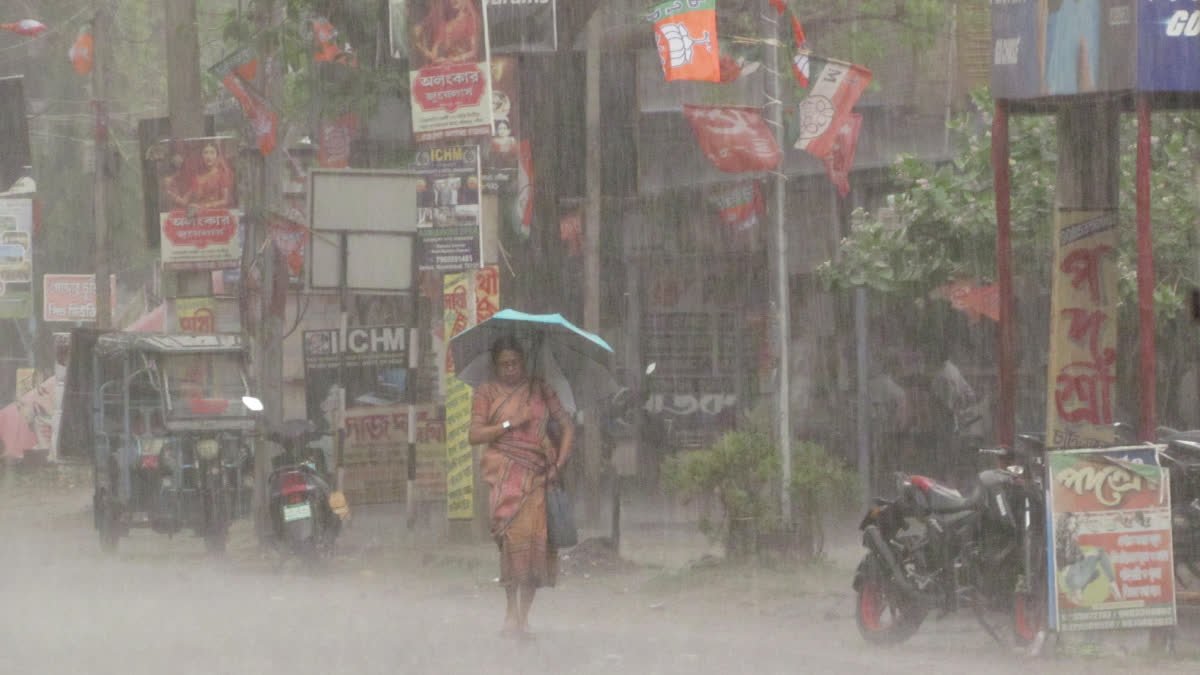

New Delhi: April 2026 has unfolded with highly erratic and unseasonal weather across India, as successive western disturbances (WDs) triggered widespread hailstorms, thunderstorms and heavy rainfall, well beyond what is typical for this time of year.
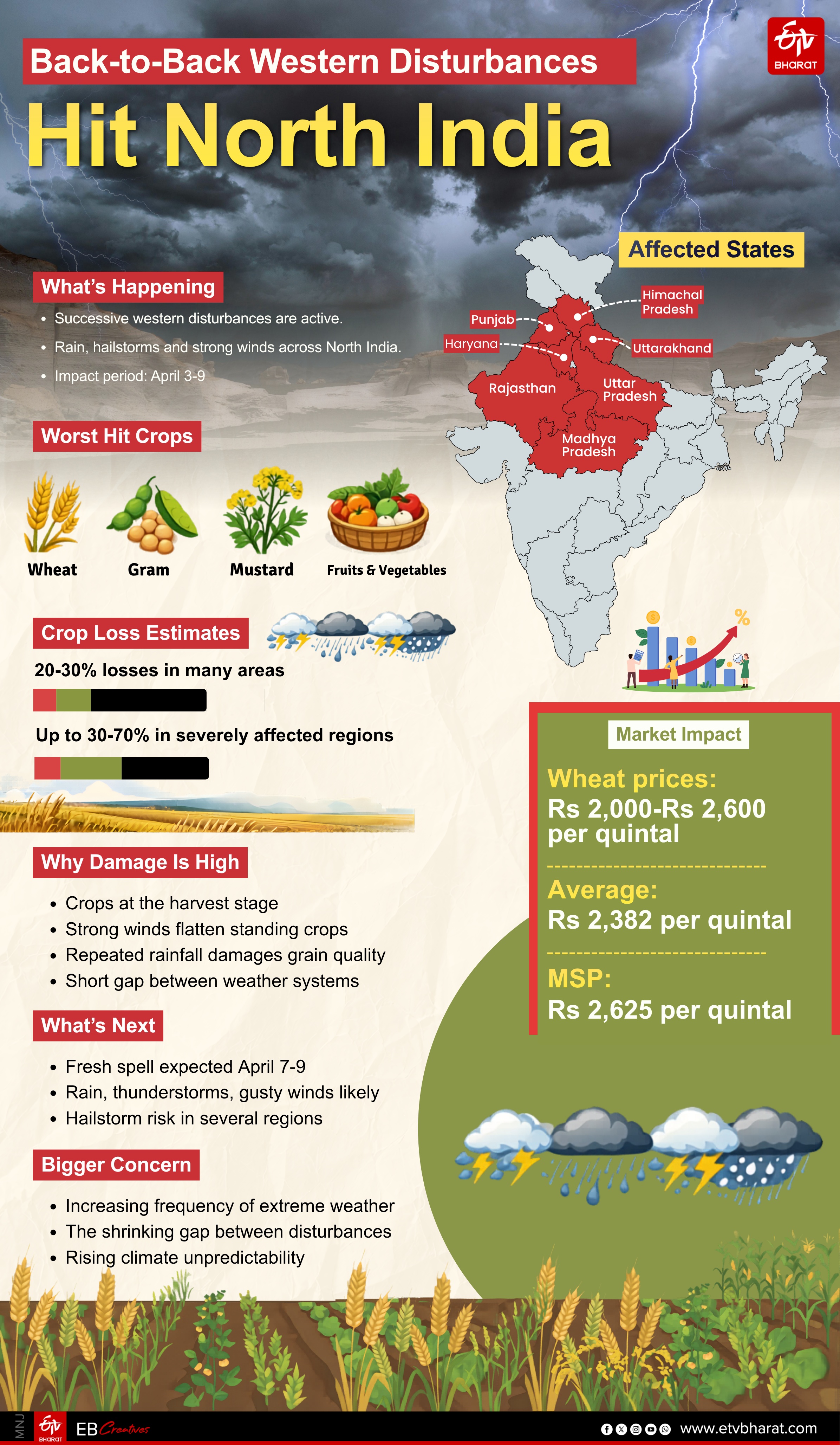
The unusual weather pattern has disrupted daily life in northern and central India and has caused severe damage to standing Rabi crops just ahead of harvest. Local field reports indicate crop losses range from 20 per cent to 30 per cent in several districts.
Crops Flattened, Losses Mount
For farmers, the timing could not have been worse. Large swathes of wheat, gram, mustard, fruits and vegetables were at the harvest stage when hailstorms struck on April 3-4, flattening crops and damaging produce.
Dr M J Khan, president of the International Agriculture Consulting Group, highlighted the scale of the crisis. He said, “The most vulnerable crops in this back-to-back western disturbance cycle are harvest-stage wheat, gram, mustard and perishable fruits and vegetables. Across Punjab, Haryana, Uttar Pradesh, Rajasthan and adjoining parts of Madhya Pradesh, the main losses are coming from hail injury, flattening of standing wheat due to gusty winds, and repeated wetting of mature grain.”
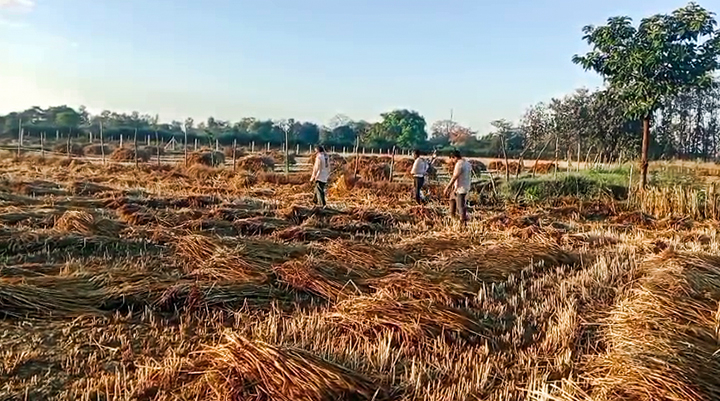
Large swathes of wheat, gram, mustard, fruits and vegetables were at the harvest stage when hailstorms struck on April 3-4, damaging the produce.
He added, “In moderately affected areas, losses may remain in the 20-30 per cent range, but in severely exposed pockets the damage can become much deeper, particularly where harvesting was delayed and the crop was already fully ripe.”
Back-To-Back Weather Systems Worsen Impact
The rapid succession of weather systems has compounded the problem. Khan added, “What makes this situation more serious is the short gap between two damaging weather systems. Farmers are not getting enough time to recover from the first spell before another one arrives.”
Repeated exposure to moisture has also degraded grain quality. He explained, “For wheat, repeated lodging followed by moisture exposure, can reduce grain quality significantly through premature sprouting, fungal staining, and higher moisture levels, all of which can affect both yield realisation and procurement acceptance.”
Farmers Struggle To Cope With Damage
Farmers have attempted emergency measures, including early harvesting, tarpaulin covering, drainage, and orchard netting. However, as Khan noted, “For large open-field cereal crops, the room for protection remains limited once the storm front sets in.”

The IMD said the current situation is being driven by an active western disturbance system over Pakistan and adjoining regions.
All India Kisan Sabha (AIKS) president Ashok Dhawale has expressed concern over the widespread destruction. He said, “The AIKS expresses deep concern over the massive damage caused to the standing Rabi crops due to ongoing untimely rains and hailstorms in the North Indian states. Wheat, gram, maize, vegetables, fruits, and many more crops have been damaged just before the harvesting stage.”
“The latest devastation of crops has totally dashed the hopes of millions of farmers and agricultural labourers who were aspiring for a bumper harvest this time.”
Recalling past losses, the AIKS president noted, “Even in the last Kharif season, crops were damaged as a result of the unprecedented 2025 floods. Farmers had to agitate for adequate compensation and yet the same is still awaited.”
Insurance And Compensation Concerns Raised
Vijoo Krishnan, General Secretary of AIKS, raised concerns over crop insurance. “The Pradhan Mantri Fasal Bima Yojana has increasingly become a tool for ensuring windfall corporate profits while failing to provide timely and adequate compensation to affected farmers.”
He demanded urgent intervention and said, “The AIKS demands an immediate field-based survey, full compensation, waiver of loans and a bonus on procurement. Criteria must cover not only the actual losses incurred but also the potential income lost.”
Market Impact And Procurement Challenges
The agricultural disruption is already impacting market prices. Commodity Online data indicates that as of April 6, the average wheat price stood at Rs 2,382.83 per quintal, with a range of Rs 2,000-2,600 per quintal, all of which are below the Minimum Support Price (MSP) of Rs 2,625 per quintal set for this season.
Amid concerns, the Madhya Pradesh government has assured that procurement will proceed as scheduled. Chief Minister Mohan Yadav said, “Wheat produced by all farmers registered on the procurement portal will be purchased; wheat from small farmers will be purchased first.”
He also emphasised preparedness, stating that there is no shortage of gunny bags in the state. He directed officials to set up control rooms and ensure inspection of weighing centres before April 10.
Procurement for the 2026-27 season will begin from April 10 in key divisions and April 15 in others, with over 1.9 million farmers registered and 3,627 procurement centres established.
Climate Change Signals Becoming Stronger
According to environmentalists, the April weather pattern reflects deeper climatic shifts rather than isolated anomalies.
Manu Singh, an environmentalist, explained, “The back-to-back hailstorms of April 3-4 and the incoming April 7-9 western disturbance reflect an unusual synoptic pattern, creating intense atmospheric instability.”
He added, “What is more concerning is the shrinking recovery window between systems, a pattern increasingly observed in late-season western disturbances.”
Linking the events to climate change, Singh said, “Warming oceans and Arctic-linked jet stream shifts are believed to delay seasonal transitions and intensify spring disturbances. This can be increasingly linked to human-induced climate change. The timing has proven devastating, with some regions reporting 30-70 per cent losses.”
He also warned that this is not just unseasonal weather, but repeated shocks, and that the Baisakhi month no longer signals harvest and relief, but anxious skies and uncertain livelihoods.
Experts Warn of Emerging ‘New Normal’
Environmental campaigner Bhavreen Kandhari echoed similar concerns. “What we are seeing is not just unseasonal rain, but a pattern of back-to-back western disturbances hitting within days and April is no longer like a transition month.”
She emphasised the compounding effect and said, “Farmers are facing a double blow; before they can salvage anything, another system arrives. These disturbances do not just hurt farmers; they ripple through procurement, storage, and supply chains.”
“The concern is not just intensity, but frequency; the shrinking gap between events is emerging as a critical threat. This is a climate crisis,” she added.
Unusual April Raises Alarm
Meteorological data underscores how unusual this April has been. From record-breaking rainfall in places like Pune, 84 mm in a single day, the highest in over a century, to temperatures dropping 3-5°C below normal in northern India, the month has defied typical seasonal patterns.
As another western disturbance looms between April 7 and 9, experts warn that the damage could deepen further, turning initial crop losses into a prolonged economic crisis for farmers already reeling under climate uncertainty.
Call For Climate-Resilient Agriculture
Dr Hishmi Jamil Husain, an environmental scientist, said, “Unusual rain and hailstorms in North India are being driven by jet streams mixing with moisture, causing sudden weather shifts. While such events are reflected in climate models, they signal rising unpredictability, crop losses, and the urgent need for more climate-resilient agriculture.”
Professor S N Mishra, a climate change expert and professor at TERI University, said, “The cool start to April over northwest India was due to an active western disturbance, which triggered hailstorms and damaged ripening wheat crops, with another spell of severe weather likely as contrasting air systems interact.”
He added, “While these events cannot be directly attributed to climate change, their intensity, variability, and damage potential appear to be increasing, making them part of an emerging ‘new normal’.”
Further, he noted, “Even though such disturbances may keep temperatures relatively lower in early April, they coincide with peak wheat harvesting, leaving the crop particularly vulnerable. Hailstorms and strong winds can significantly impact yields, making early harvesting, wherever possible, the most practical way to limit losses.”
Fresh Spell Of Rain, Snow And Hail Forecast
The India Meteorological Department (IMD) said the current situation is being driven by an active western disturbance system over Pakistan and adjoining regions.
According to IMD, “Two western disturbances are likely to affect northwest India during the week, with peak activity on April 7th and 8th. The Western Disturbance, as a cyclonic circulation, lies over central Pakistan & adjoining Punjab at lower tropospheric levels, with a trough aloft in the middle & upper tropospheric levels roughly along the longitude 71°E to the north of Lat. 28°N.”
The weather office has forecast another intense wet spell, with “fairly widespread to widespread light to moderate rainfall/snowfall with isolated thunderstorms, lightning & gusty winds (speed reaching 30-50 kmph gusting to 60 kmph)” over Jammu & Kashmir and Uttarakhand on April 7 and 8, and Himachal Pradesh between April 7 and 9.
Plains including Punjab, Haryana, Delhi, western Uttar Pradesh and parts of Rajasthan are also expected to witness scattered to widespread rainfall accompanied by gusty winds of up to 50 kmph.
Additionally, the IMD warned that “isolated hailstorm activity is likely over Jammu-Kashmir, West Uttar Pradesh and Rajasthan on April 7; Himachal Pradesh, Uttarakhand, Punjab, Haryana, Chandigarh and Delhi on April 7 and 8.”

