

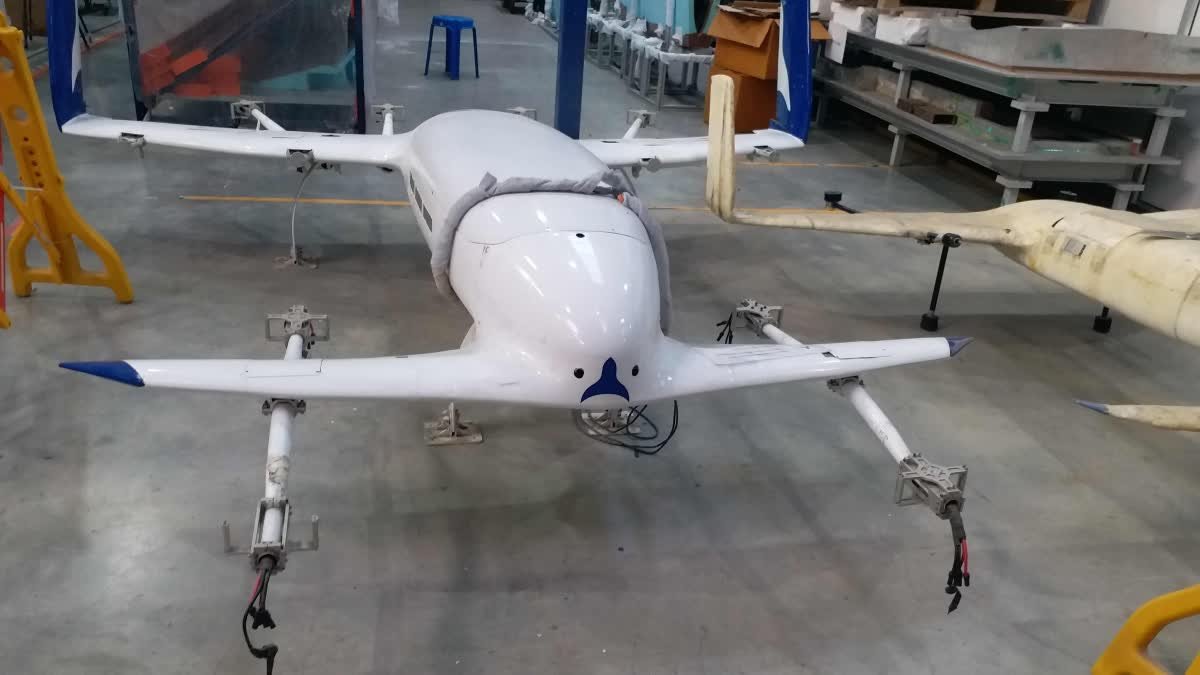

Chennai: According to Professor Satya Chakravarthy, founder of The ePlane Company and faculty member of the Department of Aeronautical Engineering at IIT Madras, India’s first electric air taxi service is expected to launch by mid-2027.
With increasing road traffic congestion, short-range electric aircraft are being developed as an alternative to rapid urban transportation. The ePlane Company, founded by Professor Chakravarthy and his student Pranjal Mehta, is developing compact electric aircraft designed for passenger use as well as medical emergencies.
First Prototype: Air Ambulance
The team is initially focusing on an air ambulance capable of carrying a pilot, patient, and trained nurse. An air taxi model for two passengers and a pilot is also being developed.
Trial flights of the prototype aircraft are scheduled over the next two months, with the first test flight taking place in November. Data from these flights will guide further improvements, which will continue until June 2026. Extensive testing and subsequent regulatory approval are expected by the end of 2026.
Professor Chakraborty stated that after completing all training, landing infrastructure, and Directorate General of Civil Aviation (DGCA) requirements, the service could be launched commercially after June 2027. The ePlane air taxi has several features.
Vertical Take-Off and Landing (VTOL)
Unlike conventional aircraft, it does not require a runway. It takes off vertically like a drone and then flies like a small winged aircraft. It operates between 300 meters and 1 km in altitude, with a range of approximately 100 km per charge, sufficient for most inter-city travel.
Efficiency and Safety
Journeys that would take an hour by road can be completed in 10-15 minutes. Along with a trained pilot, it will be equipped with cameras, sensors, and an autonomous driving car. It is expected to cost approximately 1.5 times the price of a regular taxi ride, but significantly reduce travel time. This has lower operating costs than fuel-based aircraft and is expected to remain cost-competitive due to being manufactured in India.
Air Taxi vs. Helicopter
Professor Chakraborty explained that air taxis weigh approximately 2,500 kilograms, while helicopters weigh approximately 6,000 kilograms. Air taxis require only 4,000 square feet of space to land, much less than conventional aircraft. With regulatory approvals, the rooftops of tall buildings could serve as landing pads.
He said that while it is unclear where India’s first commercial air taxi service will be launched, the project has already attracted attention for its potential role in emergency response, medical transportation, and reducing traffic congestion in cities.
“Air taxis can save significant time for patients, significantly reduce urban commute times and reduce dependence on road infrastructure. We believe this can transform mobility in Indian cities,” Professor Chakraborty told ETV Bharat.

