

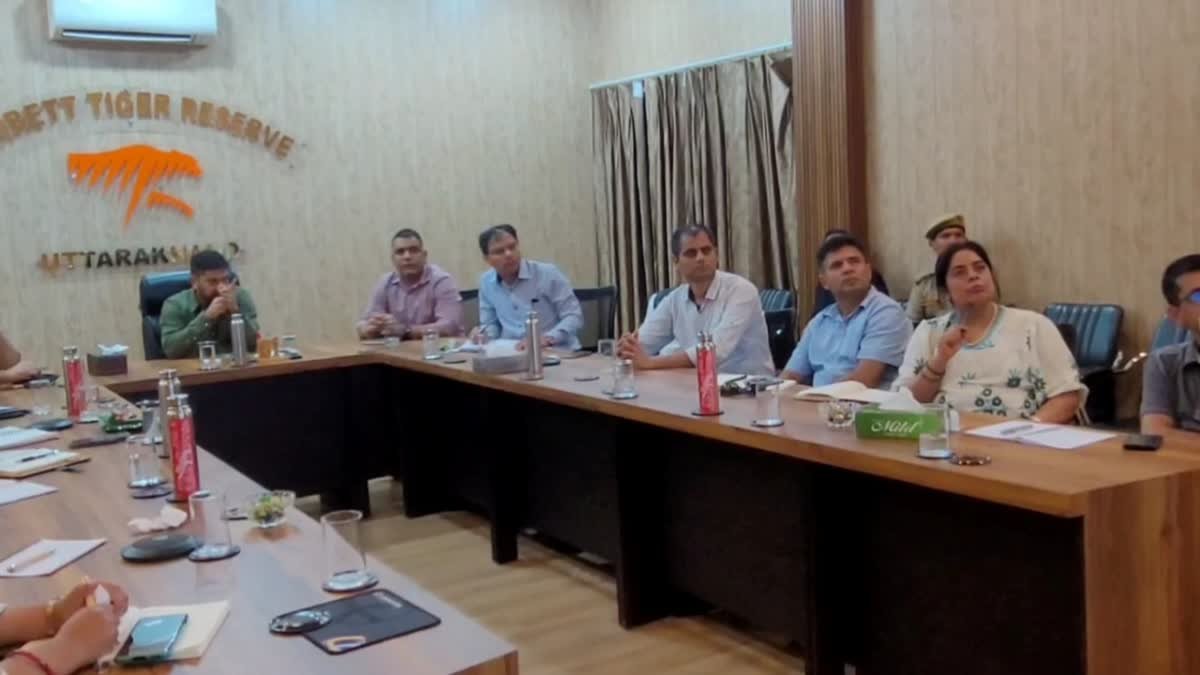

Ramnagar: A special team of forest officials from Nepal under the United Nation Development Program (UNDP) is currently visiting the world famous Corbett Tiger Reserve in Uttarakhand. The purpose of this tour is to understand and adopt the experience and strategies of the Corbett administration to deal with the challenges of wildlife conservation and human-wildlife conflict in Nepal.
Corbett Tiger Reserve is not only India’s first national park, but also one of the best tiger reserves in the world. Its forest management, patrolling system, grassland management and tourism management model are examples for many countries. The forest officials from Nepal are studying all these aspects in depth here, so that they can also implement them in the forests and protected areas of their country.
The Corbett administration told the team in detail about modern techniques to deal with man-animal conflict and methods of community-based participation. The team was told how state-of-the-art equipment like camera traps, GPS tracking and drone surveillance are used in Corbett. Apart from this, the team also learned the measures adopted for conservation and rejuvenation of grasslands, ways to control the number of tourists and strategies to promote responsible tourism.
The Nepal officials also appreciated the monitoring system of tigers and other wildlife in Corbett, anti-poaching patrolling network and quick response system adopted in wildlife rescue operations. They believe that this holistic approach adopted in Corbett not only protects wildlife but also maintains balance with the local communities.
Giving information, Dr. Saket Badola, Director of Corbett Tiger Reserve, said that this visit is very important for the forest officials of Nepal. Here they have taken training on topics like man-animal conflict management, wildlife conservation, grassland development and tourism management. We hope that this knowledge will help them to do better conservation work in their country as well.
It is clear from this tour that international cooperation and exchange of knowledge can prove to be extremely effective for wildlife conservation. This experience of Corbett has the potential to bring positive change in the forests of Nepal as well.

