

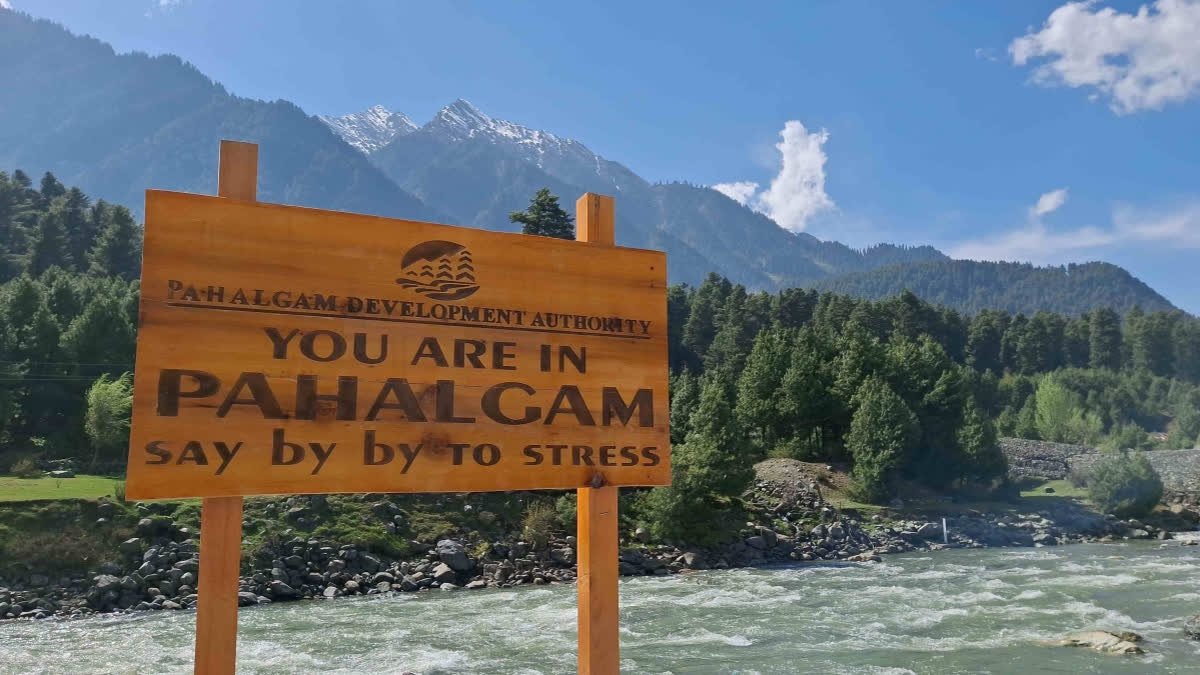

Srinagar: In a year since the deadly Pahalgam terror attack, the tourism sector in Jammu and Kashmir has undergone a shift that appears stuck in time. At a modest guesthouse overlooking mountains not far from Baisaran meadow, where 25 tourists were killed in April 2025, the 12-room property was once a hive of activity. Its owner Zubair Ahmad recalls the time when barely he had time to talk as tour operators would haggle to make way to rooms even before they were cleaned.
“That has changed now. I am counting days between tourist bookings,” he said. The hotel reached full occupancy last week when a Bollywood film crew camped there. But largely, an average 2-4 rooms are occupied and on some days the hotel runs empty.
“The rates have been cut by half and even more on days when there is desperation to at least have someone at the hotel,” said Ahmad.
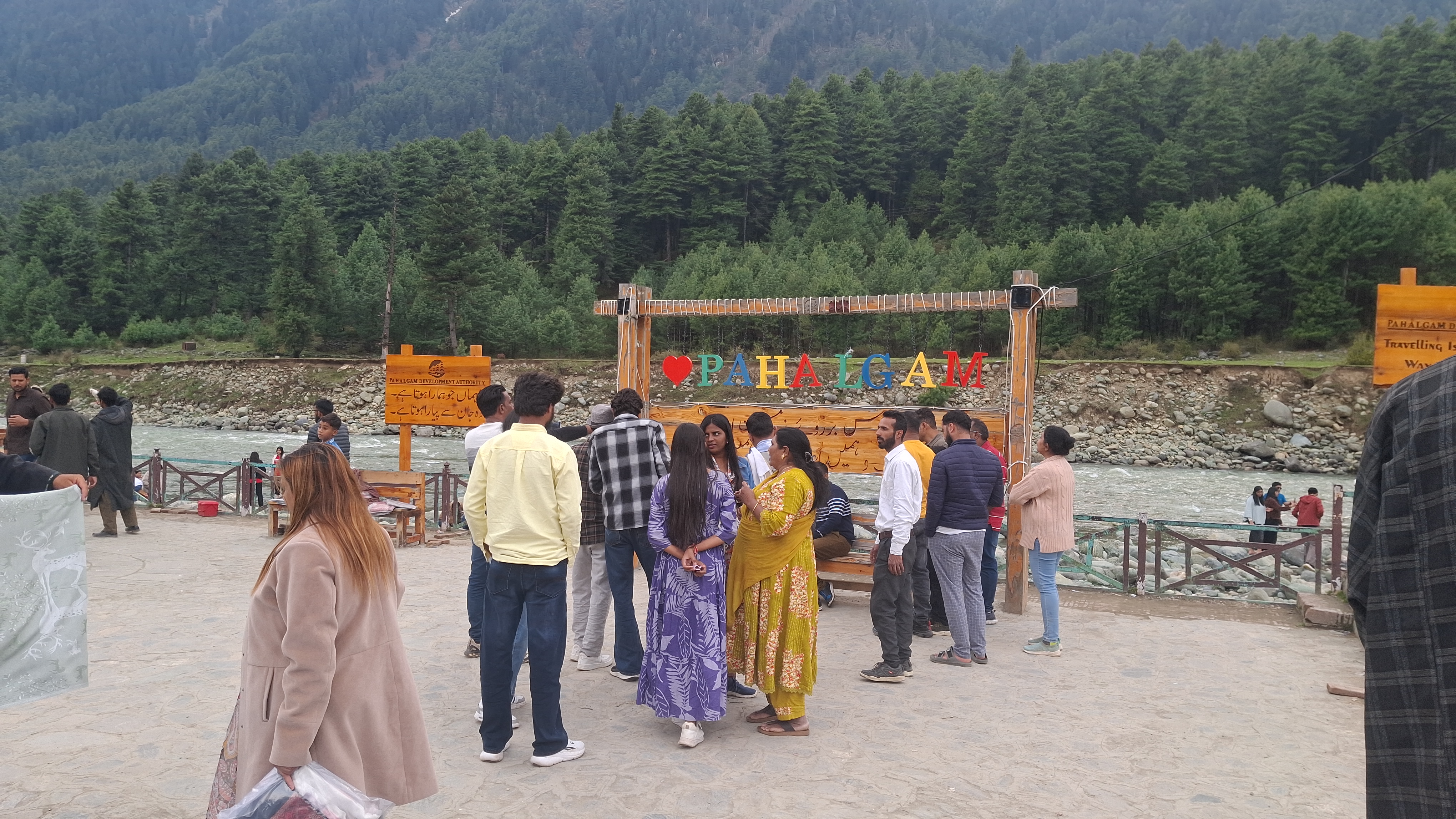
Pahalgam Attack Anniversary: Tourist Inflow Plummets; Hoteliers Struggle to Break Even
The official data mirrors the collapse of the hospitality sector. Before the attack, Pahalgam would host over 3,000-4,500 tourists a day from across the country, as well as foreigners. But all that has changed.
Official data accessed reveals Pahalgam hosted 4,30,495 domestic tourists between May 2025 till April 2026, a sharp decline from the previous years when annual arrivals exceeded over 10 lakhs.
The numbers are striking when compared with those of April 2025, the month of the attack. Until the day bullets rippled through calm and silence in Baisaran meadow on April 22, over 1.37 lakh tourists had visited Pahalgam.
A comparison with the previous months shows that decline has been steep with 2,54,930 tourist footfalls from January 2026 till April against 4.63 lakh in the first four months last year. Of all these months, the most striking contrast lies in February 2026, when only 5,602 tourists arrived, a staggering over 94 per cent drop from 2025.
Amid this, the hospitality sector is facing a structural crisis. After the abrogation of Article 370 in August 2019, Kashmir saw an unprecedented tourism arrival in the last three decades since militancy erupted. The sudden deluge expanded the hospitality sector, prompting locals to invest in constructing hotels or turn their houses into guesthouses.
In the picturesque Pahalgam, Hamid Masoodi, who is in hospitality sector for the last 14 years, notes occupancy in their four-star rated property is at the lowest in the last six years. Of the 30 rooms, an average of five rooms are booked in a day.
“Between 2006-2009, tourist arrivals to the Valley were sluggish, but the number of hotels was proportional. Now, with new hotels and guesthouses, everyone is fighting for a few guests. We don’t even cross the breakeven point,” he said
This has hit rates as a room in the high-end hotels, which cost over Rs 20,000, has dropped to Rs 8,000, says market experts.
Anupama Jamdade returned to Pahalgam in April 2026, a year after her previous visit and noticed a clear shift. While guiding a group of 30 tourists from Maharashtra, she observed that none of them chose to ride horses, a once popular activity, because a sense of fear still lingered.
“I had to reassure them and even arranged travel insurance for their safety,” she said. “I told them that locals would take care of them if anything went wrong.”
However, after spending time in Srinagar and Pahalgam, the group’s apprehensions eased. By the end of the trip, the tourists found Kashmiri hospitality to be truly unmatched—just as Jamdade had promised.

