

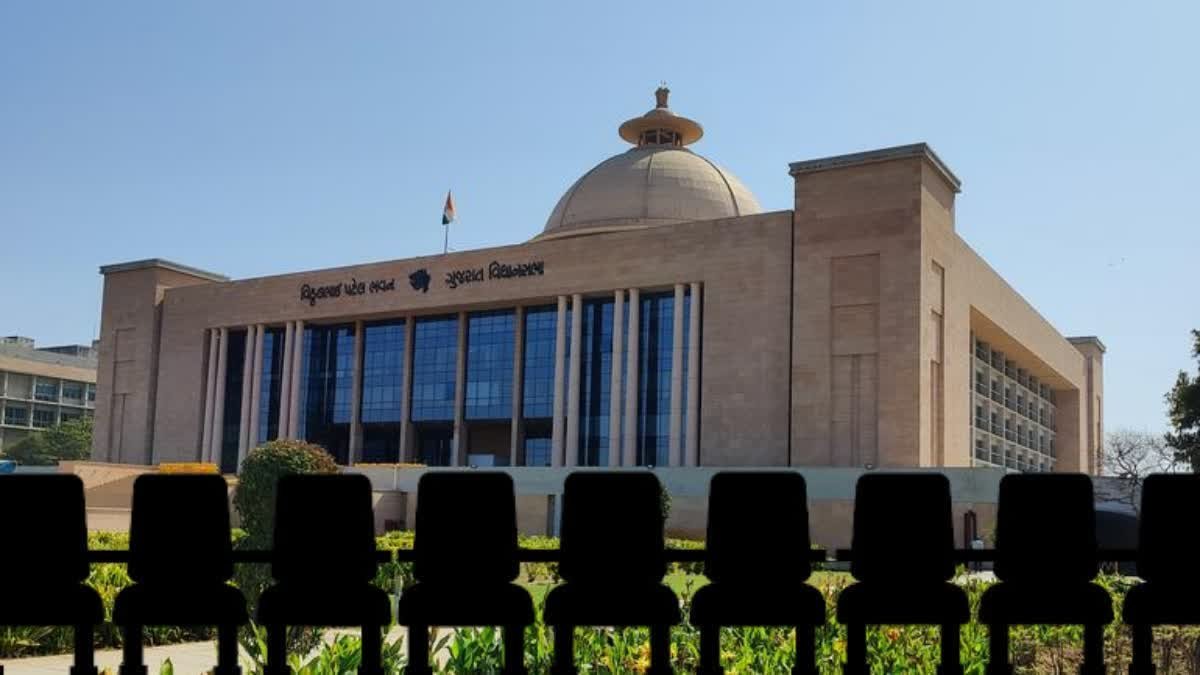

Gandhinagar: On Tuesday, the Gujarat government introduced the Gujarat Uniform Civil Code (UCC) Bill, 2026, in the Legislative Assembly, proposing a uniform legal framework to regulate marriage, divorce, inheritance, and live-in relationships, transcending religious lines. Chief Minister Bhupendra Patel presented the bill in the Assembly.
An expert committee appointed by the state government had submitted its report regarding the implementation of the UCC just a week prior. If passed by the Assembly, Gujarat will become the second state in the country—following Uttarakhand—to enact a Uniform Civil Code bill. Uttarakhand had passed its UCC bill in February 2024.
Titled the ‘Gujarat Uniform Civil Code, 2026,’ this proposed legislation will be applicable across the entire state and will also extend to residents of Gujarat currently residing outside the state’s borders. However, the proposed law will not apply to Scheduled Tribes or certain specific groups whose traditional rights are protected under the Constitution. According to the ‘Statement of Objects and Reasons’ accompanying the bill, its primary objective is to establish a uniform legal framework. Among other provisions, the bill includes measures for the registration of live-in relationships and for their formal termination through a declaration process.
The bill also explicitly prohibits bigamy. It stipulates that a marriage shall be deemed valid under this Code only if, at the time of the marriage, neither of the parties has a living spouse.
Prior to the bill’s introduction, State Deputy Chief Minister Harsh Sanghavi stated that the Chief Minister was set to present the UCC bill in the House with the aim of establishing a uniform legal system for all sisters, daughters, and mothers of Gujarat—a move that is poised to prove a historic step toward women’s empowerment.
He further added that although the country attained independence in 1947, true equality could not be fully realized due to the existence of disparate social, traditional, and religion-based personal laws. It was women who bore the brunt of this situation, suffering the most as a result. The Deputy Chief Minister further stated that following the implementation of the UCC, uniform rules will apply to everyone regarding matters related to marriage, civil affairs, and family matters, thereby providing women with enhanced justice and protection.
Harsh Sanghavi clarified that the Uniform Civil Code is not being introduced with any specific religion in mind; rather, it serves as a legal instrument to ensure equality and justice across the entire society. He noted that Gujarat would become the second state in the country to introduce a Uniform Civil Code Bill—a matter of pride for the state.
This initiative could serve as a guiding model for other states. He also expressed confidence that all elected representatives of the state, keeping in mind the interests of the sisters, mothers, and daughters within their respective constituencies, would support this Bill and contribute to the success of this historic decision.

