


New Delhi: India’s first Prime Minister, Jawaharlal Nehru, in 1954, during the debate on the opposition’s motion to remove the then Lok Sabha Speaker, G.V. Mavalankar, conveyed to Congress MPs that they were not bound by any whip or directive. He urged all MPs to consider the matter “irrespective of party affiliation.”
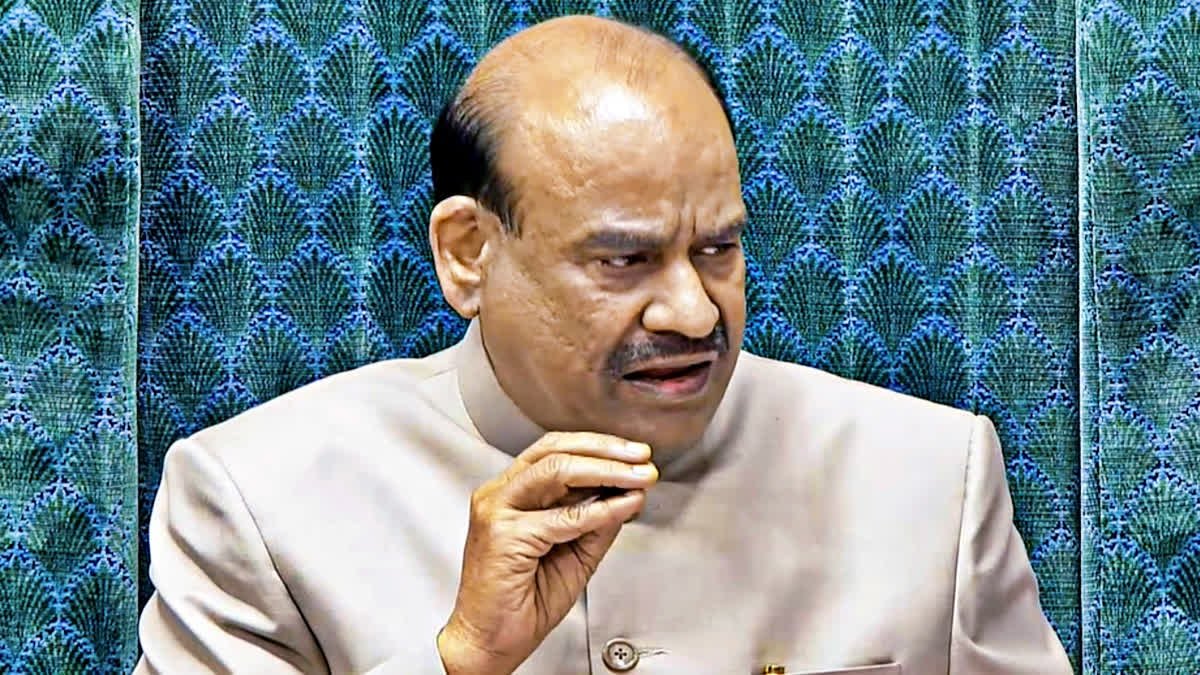
Nehru appealed to Lok Sabha members to view the issue not from a party perspective, but as a matter concerning the dignity of the House. The notice given by the opposition to bring a motion to remove Lok Sabha Speaker Om Birla has attracted widespread attention. However, there have been three previous occasions when the opposition expressed no confidence in the Speaker of the Lok Sabha or the Chairman of the Rajya Sabha and initiated the process of removing them.
The first such situation arose on December 18, 1954, when the opposition moved a motion to remove the then Lok Sabha Speaker, G.V. Mavalankar. The motion was adopted and debated after more than 50 members stood in support.
Nehru also urged the Speaker to allow the opposition more time for discussion. The motion was hotly debated, during which the numerically weak opposition sharply criticized Nehru and accused the Speaker of bias.
Nehru intervened in the discussion, saying, “If I may be permitted, as the leader of the House and taking advantage of this high privilege, and not as the leader of the majority party, I would like to address the House. As far as this majority party is concerned, I would like to tell them that none of them is bound by any whip or directive. They should vote as they wish. This is not a party matter.” This is a matter for the consideration of this House, of every individual, regardless of party affiliation.”
He said, “Therefore, let us not consider this a party issue but from the perspective of the members of this House, because this matter not only affects the Honourable Speaker, but also the dignity of this House as Parliament. It affects the first citizen of this country, the Speaker of this House.”
Nehru said that when the dignity of Parliament is at stake, it is a serious matter.
The then Prime Minister had said, “What is said about the Speaker, what is done about the Speaker, affects every one of us who claims to be a member of this House.”
He said, “I want the members to understand this, because ever since this matter came before the House, I have been deeply saddened. We have known the Speaker for many years and have seen him in action, and it is possible that some of us may have a completely different opinion of him from others.
Nehru had said, “It has happened that some of us did not particularly like a decision or ruling of his. It is one thing to dislike a decision, to disagree with it, or, if I may say so, to feel a little annoyed by an incident. These things happen. But it is quite another to question the integrity of the person who holds the dignity of this House in his hands.”
He had said, “When we question his integrity, we prove to our countrymen, and indeed to the whole world, that we are small people, and that is the gravity of the situation. This is for you to decide, because we are demonstrating to the world and our country that we are a petty, quarrelsome people who indulge in petty talk, who make accusations without thinking about their implications and the consequences.”
Nehru said, “I am not saying that it is absolutely impossible to move a motion against the Speaker. Of course, the Constitution provides for it. No one challenges the right of the Opposition or any member of the House to move such a motion. I do not deny this right, because it is granted by the Constitution. The issue is not one of legal right, but of propriety and whether it is appropriate to do so.”
Responding to the examples cited by the opposition, Nehru said, “Mr. (S.S.) More, in his soft and gentle voice, often concealing a bitter undertone, told us what happened to the head of a king in 17th-century England. He told us about the customs of the British House of Commons 200 years ago and many other such things. I listened in astonishment. This was a serious matter. We are in the Republic of India, in the middle of the 20th century, and we are being told about events that occurred in England in the Middle Ages or some other time.”
He said, “It is true that we largely emulate the practices of the British Parliament, but it is also true that the practices of the British Parliament today are not influenced by what happened there in the 17th century.”
Nehru said, “But beyond that, we have nothing to do with what happened in the British Parliament. We are concerned about the honor of our Parliament, we are concerned about the honor of the person who upholds the dignity and prestige of this Parliament.”
He said, “I listened to many speeches made by the opposition. It was a display of incompetence, shallowness, and lack of facts.”
The then Prime Minister then strongly defended the Speaker of the Lok Sabha and strongly criticized the opposition for questioning his credibility.
Congress then had a strong majority of over 360 members in the 489-member Lok Sabha, and the motion was rejected by voice vote.
In 1966, a motion against the then Lok Sabha Speaker Sardar Hukam Singh could not proceed as it lacked the necessary 50-member support to initiate it.
On April 15, 1987, the opposition introduced a motion to remove the then Lok Sabha Speaker Balram Jakhar.
Intervening in the discussion, then-Prime Minister Rajiv Gandhi twice quoted Nehru’s remarks from the discussion on the 1954 motion and strongly criticized the opposition for questioning the Speaker’s integrity. The motion was rejected by voice vote.
In December 2024, the opposition submitted a notice in the Rajya Sabha demanding the removal of then-Vice President Jagdeep Dhankhar as Chairman of the Upper House, accusing him of partisan conduct.
However, it was rejected at the initial stage on procedural grounds. Opposition members submitted a notice last Tuesday to move a motion to remove Lok Sabha Speaker Birla. This notice will be listed in the second phase of Parliament’s Budget Session, which begins on March 9. Sources have said that it will be reviewed soon as per the rules.

