

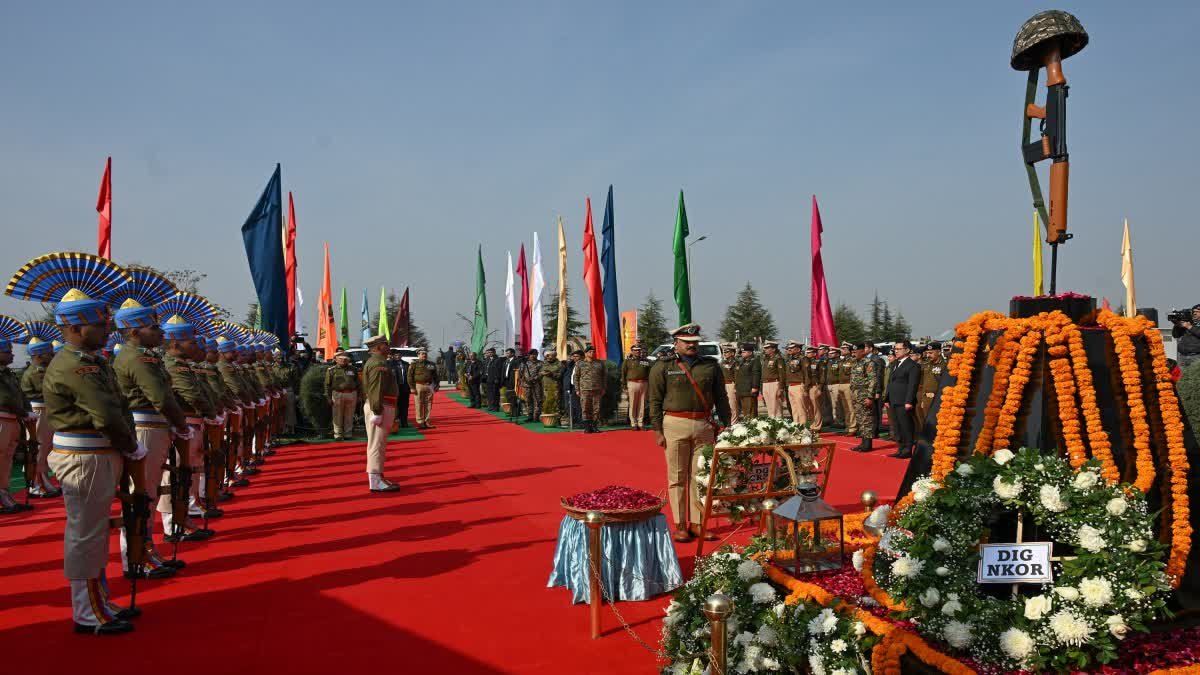

Srinagar: Seven years after a domestic suicide bomber blew himself up in Pulwama, Jammu and Kashmir’s security system has undergone gradual but significant changes.
This change is evident everywhere, from security drills to the counter-terrorism strategies used in Karewas, where a lone Jaish-e-Mohammed (JeM) bomber targeted a Central Reserve Police Force (CRPF) bus, killing 40 soldiers.
In Tral, South Kashmir, home to slain local Jaish terrorist Noor Mohammad Tantre, alias Noor Trali, who is credited with reviving the Pakistan-based terrorist organization in the Valley since 2005, the change is palpable.
For villagers like Javed Ahmad, the tragic incident sparked a major shift in public thinking, leading to political change and major action against the terrorist network. “The big change is that people’s lives have been saved. Otherwise, funerals and protests were a daily occurrence.”
He said, “Families were losing their loved ones in a never-ending cycle of violence. Now that has stopped.” In Shopian, farmers like Rashid Ahmed reported that the end of fear has led to increased productivity as people are working without major disruptions. He said, “There are no interruptions in studies now. Those who used to exploit the closure of schools and colleges for their own benefit are gone. But some problems still persist.”
Amidst these difficulties, National Conference MLA Justice (Retd.) Hasnain Masoodi, whose constituency falls in Pulwama, talks about the disruption of traffic on National Highway 44, which connects Kashmir to the rest of the country.
Following the Pulwama terror attack, increased security, specific cut-off times, surveillance cameras at specific locations, and security checkpoints to ensure safe movement of forces on strategic highways in South Kashmir have caused inconvenience to residents.
Former High Court Justice Masoodi highlighted the plight of residents in flood-prone areas along the Jhelum River, such as Kandijal and Lethpora. He said that during floods, slippery roads to higher elevations like National Highway 44 blocked their access. Private vehicles are stopped to allow security force convoys to pass freely.
Masoodi said, “This causes inconvenience to people, especially sick patients traveling in private vehicles.” He added that the central government should address these issues. Luv Puri, a former UN counter-terrorism official and Kashmir expert, believes that the nature of the threat has evolved since the February 2019 Pulwama bombing.
He said the tendency toward large-scale terrorist attacks like the ones in Pahalgam and the Red Fort is to “psychologically shock the Indian nation rather than sustaining long-term terrorism on the ground.”
Puri told ETV Bharat, “It was equally significant that the suicide bomber was a Kashmiri youth, which underscores the complex relationship between cross-border terrorism and local radicalization.” “This dual reality complicates response and prevention strategies, as they also require open community participation – areas that require time, trust, and an understanding of the issues involved.”

