

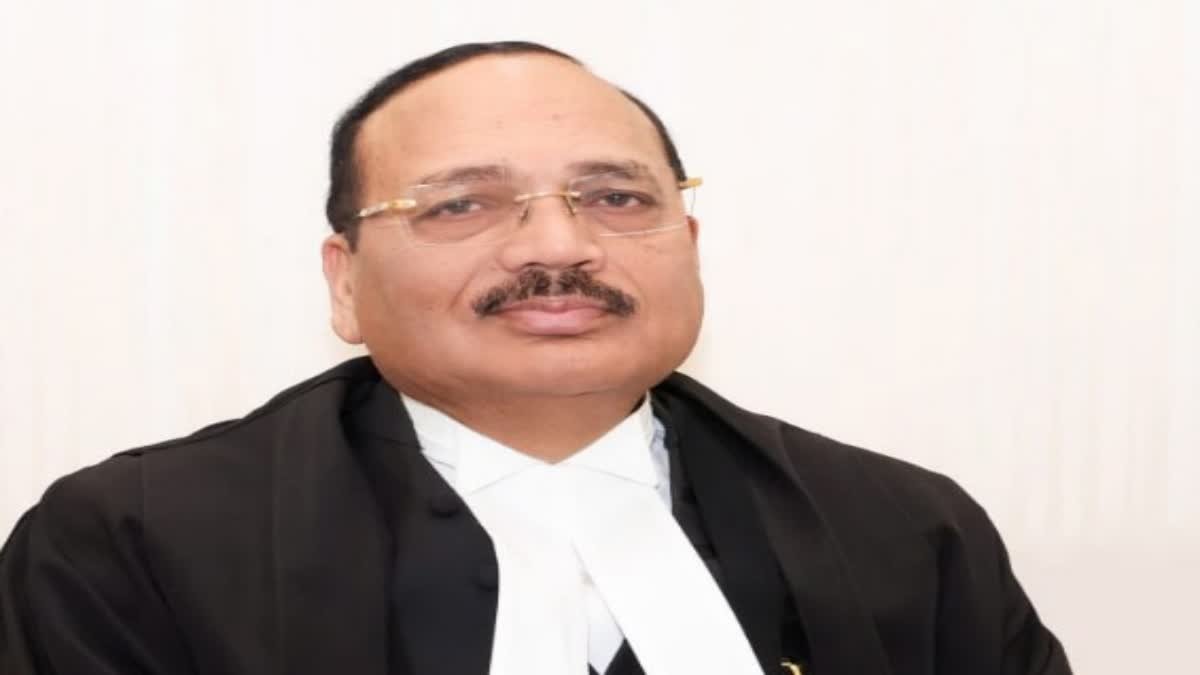

New Delhi: Justice Surya Kant will be sworn in as the 53rd Chief Justice of India on Monday. He has been a part of several landmark judgments and orders, including the abrogation of Article 370, which granted special status to Jammu and Kashmir, the thorough revision of the Bihar voter list, and the Pegasus spyware case.
Justice Surya Kant will succeed Justice B.R. Gavai, whose term ends on the evening of November 23.
Justice Surya Kant was appointed as the next CJI on October 30 and will serve in the position for approximately 15 months. He will retire on February 9, 2027, upon attaining the age of 65.
Born on February 10, 1962, in Hisar district, Haryana, to a middle-class family, Justice Surya Kant rose from a small-town lawyer to the highest judicial position in the country, where he was a part of numerous judgments and orders on matters of national importance and constitutional significance. He also holds the distinction of securing a “First in First Class” in his Master’s in Law from Kurukshetra University in 2011.
Justice Surya Kant, who authored several notable judgments in the Punjab and Haryana High Court, was appointed Chief Justice of the Himachal Pradesh High Court on October 5, 2018. His tenure as a Supreme Court Justice is known for his decisions on the abrogation of Article 370, freedom of expression, and citizenship rights.
Justice Surya Kant was part of the court bench that recently heard the President’s consultations regarding the powers of the Governor and President in dealing with bills passed by the state legislature. The decision is awaited, and could have implications for all states.
It is worth noting that Justice Surya Kant was part of the bench that suspended the colonial-era sedition law and directed that no new FIRs be registered under it until the government reviewed it.
Justice Surya Kant also asked the Election Commission to make public the details of 6.5 million voters excluded from the draft voter list in Bihar. He issued this direction while hearing petitions challenging the Election Commission’s decision to conduct a Special Intensive Revision (SIR) of the electoral rolls in a poll-bound state.
In an order emphasizing grassroots democracy and gender justice, he headed a bench that reinstated a woman sarpanch who had been illegally removed from office and exposed gender bias in the case.
He is credited with directing that one-third of the seats in bar associations, including the Supreme Court Bar Association, be reserved for women.
Justice Surya Kant was part of the bench that appointed a five-member committee headed by former Supreme Court Justice Indu Malhotra to investigate the security lapse during PM Modi’s visit to Punjab in 2022.
He also upheld the ‘One Rank, One Pension’ (OROP) scheme for the defense forces, declaring it constitutionally valid, and continued to hear petitions from women officers seeking parity in permanent commissions in the armed forces.
Justice Surya Kant was also on the seven-judge bench that struck down the 1967 AMU decision, paving the way for a review of its minority status. He was also part of the bench that constituted a committee of cyber experts to investigate the alleged use of the Israeli spyware Pegasus to monitor certain individuals.

