

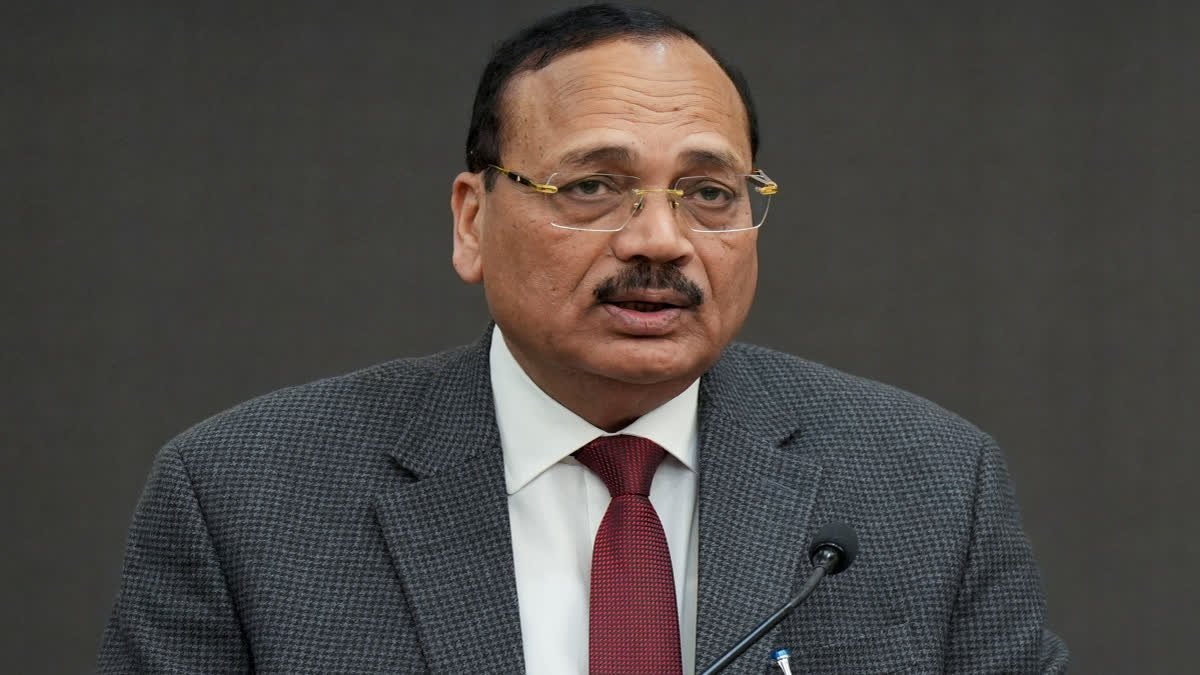

Hyderabad: Senior Supreme Court judge Justice Surya Kant will become the 53rd Chief Justice of India on November 24, 2025. He will assume this responsibility after the current CJI, Justice B.R. Gavai, retires on November 23. Justice Surya Kant’s tenure will be approximately 14 months (until February 2027). This article will detail Justice Surya Kant’s journey from a small village in Haryana to the prestigious position of CJI.
Early Life and Education:
Born on February 10, 1962, in Hisar, Haryana, into a middle-class family, Justice Surya Kant graduated from the Government Postgraduate College, Hisar, in 1981. He received a Bachelor of Laws degree from Maharshi Dayanand University, Rohtak, in 1984. He began practicing law in the Hisar District Court the same year. He received his LLM degree from Kurukshetra University in 1985, securing first rank in the first class in 2011.
Legal Career:
Justice Surya Kant had the distinction of being appointed the youngest Advocate General of Haryana on July 7, 2000. Due to his legal acumen and consistent performance, he was designated as a Senior Advocate in March 2001.
He served as Advocate General of Haryana until his elevation as a permanent Judge of the Punjab and Haryana High Court on January 9, 2004. Justice Surya Kant assumed office as the Chief Justice of the Himachal Pradesh High Court on October 5, 2018.
On February 23, 2007, he was nominated as a Member of the Governing Body of the National Legal Services Authority (NALSA). He held this position for two consecutive terms until February 22, 2011. He is also a member of various committees of the Indian Law Institute, a deemed university under the aegis of the Supreme Court of India.
In addition to his judicial responsibilities, Justice Surya Kant also pursued higher education and earned a Master of Laws (LL.M.) degree from Kurukshetra University through the Directorate of Distance Education in 2011, where he secured a first-class standing.
Notable Contributions in the Supreme Court:
On May 24, 2019, he was elevated to the Supreme Court of India, where he has been a part of several key benches and constitutional cases. Currently, he is also the Chairman of the Supreme Court Legal Services Committee, effective November 12, 2024.
In the Supreme Court, Justice Surya Kant has been a part of several landmark Constitution Benches, including the Article 370 abrogation case, the decision on Section 6A of the Citizenship Act, and the decision affirming the minority status of Aligarh Muslim University.
He also headed the bench that granted bail to former Delhi Chief Minister Arvind Kejriwal in the CBI liquor policy case. He also stated that his arrest by the agency was carried out following due process, reflecting his meticulous approach to independence and procedure.
Justice Surya Kant was part of the five-judge bench hearing the Presidential Reference regarding the powers and timeframe of Governors and the President over bills passed by state legislatures.
He was also part of the bench reviewing the Supreme Court’s Vijay Madanlal Choudhary judgment regarding the broad powers of the Enforcement Directorate (ED) under the Prevention of Money Laundering Act.
The opinion on the Presidential Reference is expected by November 21, the last working day of Chief Justice B.R. Gavai, who heads the bench, and final arguments on the PMLA review case are scheduled to begin next month.
Justice Surya Kant headed the bench that directed the Election Commission to make public the details of 6.5 million voters excluded from the special intensive revision of voter lists in Bihar.
He also directed that one-third of the seats in bar associations, including the Supreme Court Bar Association, be reserved for women. He also heard a case related to the blockade by farmers at the Shambhu border near Ambala.
Justice Surya Kant was part of the bench that constituted a five-member committee headed by former Supreme Court judge Justice Indu Malhotra to investigate the security lapses during Prime Minister Narendra Modi’s 2022 visit to Punjab.
He upheld the One Rank, One Pension (OROP) scheme for the defense forces, declaring it constitutionally valid. He was also part of the bench hearing the Pegasus spyware case, which appointed a panel of cyber experts to investigate allegations of illegal surveillance. He also said that the state cannot have “free rein under the guise of national security.”
Thoughtful and balanced judge:
Justice Surya Kant is known for his balanced approach to judicial matters and sensitivity to human rights. He directed the Election Commission to make public the details of 6.5 million missing voters. He mandated one-third reservation for women in bar associations. He served two terms as a member of the National Legal Services Authority (NALSA) and is also the Chairman of the Supreme Court Legal Services Committee.

