

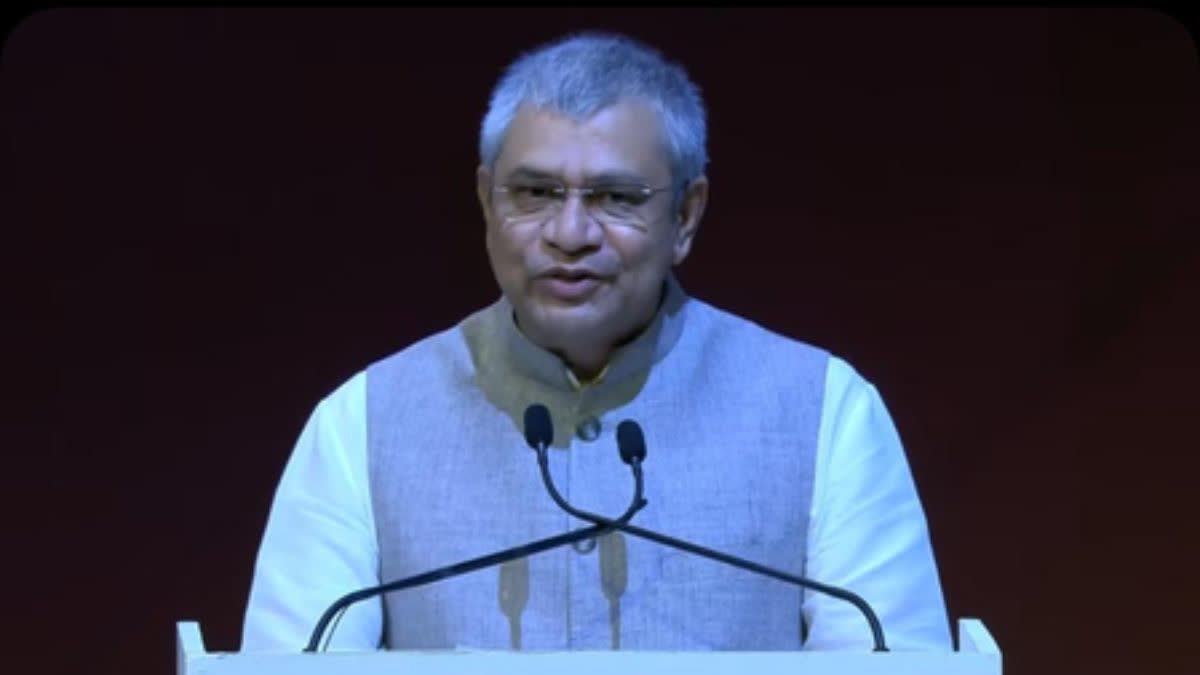

New Delhi: The Cabinet has approved the construction of the Mokama-Munger section of the Buxar-Bhagalpur High-Speed Corridor in Bihar on Hybrid Annuity Mode (HAM). The total length of the project is 82.4 km and the total cost is Rs 4,447.38 crore.
Union Minister Ashwini Vaishnav, while giving information to media persons, said that this section passes through important regional cities like Mokama, Barhiya, Lakhisarai, Jamalpur, Munger or connects them to Bhagalpur.
He said, “The Munger-Jamalpur-Bhagalpur belt in eastern Bihar is emerging as a major industrial region, focusing on ordnance factories (existing gun factory and another factory proposed by Defence as part of the ordnance factory corridor), locomotive workshops (at Jamalpur), food processing (ITC at Munger) and related logistics and storage hubs.”
‘Traffic expected to increase’
He further said that Bhagalpuri is emerging as a textile and logistics hub led by silk (details of proposed textile eco system at Bhagalpur). Barhiya is emerging as an area for food packaging, processing and agri-warehousing. The growing economic activity in the region is expected to lead to an increase in freight and traffic on the Mokama-Munger section in future.
The minister said that the 4-lane access-controlled corridor with reduced tolling supporting an average vehicle speed of 80 km/h with a design speed of 100 km/h will reduce the total travel time by about 1.5 hours. It will also provide safe, fast and seamless connectivity for both passenger and freight vehicles.
The proposed project will create jobs
The Union Minister further said that the 82.40 km long proposed project will generate direct and indirect employment. Vaishnaw informed that the project will also create additional employment opportunities due to increased economic activities in the area around the proposed corridor.
In another project, Union Minister Vaishnaw informed that the doubling of Bhagalpur-Dumka-Rampurhat single railway line section (177 km) in Bihar, Jharkhand and West Bengal has been approved, with a total cost of Rs 3,169 crore.
Infrastructure development will be possible
He said, “Increase in line capacity will improve mobility, thereby increasing the efficiency and service reliability of Indian Railways. The multi-tracking proposal will ease operations and reduce congestion, thereby making possible the necessary infrastructure development on the busiest sections of Indian Railways.”
The project will cover five districts of Bengal
The project will cover five districts of three states Bihar, Jharkhand and West Bengal, increasing the existing network of Indian Railways by about 177 km. The project section also provides rail connectivity to major destinations like Deoghar (Baba Baidyanath Dham) and Tarapith (Shakti Peeth), which attract pilgrims and tourists from across the country. He said that the multi-tracking projects will increase connectivity to about 441 villages and about 28.72 lakh population and three aspiring districts (Banka, Godda and Dumka).”

